Share the page

Innovate to reduce plastic pollution on the islands of Kerkennah in Tunisia (Plast'Ile)
Project

-
Project start date
-
Status
In progress
-
Estimated date of project termination
-
-
Project financing date
-
-
Financing duration
-
4,5 years
-
Type of program
-
FFEM
-
Global financing amount
-
€ 1 000 000
-
FFEM financing amount
-
€ 500 000
-
Project lead member institution(s)
-
French Ministry of the Ecological Transition
-
Country and region
-
Tunisia
-
Type of financing
-
Partners
-
The French Agency for Ecological Transition (ADEME), The French Coastal Protection Agency, Prince Albert II of Monaco Foundation, Tunisian Ministry of Local Affairs and Environment, municipality of Kerkennah
-
Beneficiaries
-
Small Islands Organisation (SMILO)
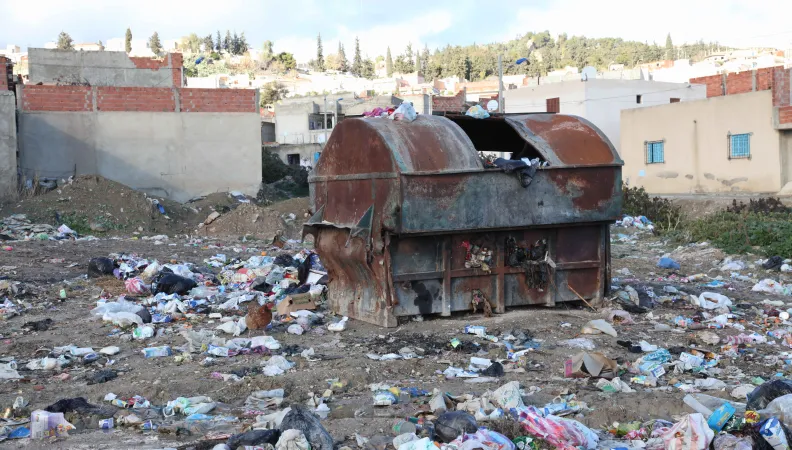
Plastic waste represents an increasingly significant and problematic pollution in the world. To support the pilot island site of Kerkennah in managing this issue, the FFEM supports the Plast'ile project which allows for the implementation of a holistic plastic pollution strategy, by paying particular attention to reduction at source.
Context
According to a study by the Ellen MacArthur Foundation, if no action is taken, by 2050 there will be more plastic than fish in our oceans. The Kerkennah archipelago in Tunisia has not escaped this pollution, with over 600 tonnes of waste thrown into the sea every year by its 2,500 or so fishermen.
To respond to this problem, waste management has been identified as a primary challenge by the local Island Committee which was established in 2019 as part of the “sustainable small islands” accreditation (SMILO) roll-out, bringing together public and private resources and the local population.
This project, supported by the FFEM, aims to extend the work already started on the collection, treatment and recycling of used plastic traps through innovative solutions.
Description
The project has four components:
- Establishe the state of the art for waste management in order to collect the necessary information to implement sustainable management of plastic waste, through mapping their primary locations.
- Drafte an exemplary waste management plan with concrete actions on three pilot sites in the various geographical contexts (agricultural, port, and residential). In parallel, developing alternatives to plastic traps, along with sustainable fishing practices.
- Set up 4 pilot projects (implementation of a collection and sorting system in a commune, school without plastic, zero plastic tourism and hospitality, mobilization of fishermen).
- Develop, optimising and disseminating the project results in order to replicate the programme on other islands facing the same problems.
Outcomes
- Sustainable regional management of the Kerkennah Islands through local and autonomous governance managed by the island's decision-makers (Island Committee).
- Reduction in the amount of plastic waste found on land and in the sea and curbing plastic consumption.
- Maintaining sustainable fishing activities through implementing more virtuous and more environmentally-friendly practices.
- Strengthening the competences of local authority representatives in plastic waste management and sustainable development.
Innovative and exemplary features
This project, supported by the FFEM, provides a valuable example by integrating a “zero plastic waste” dynamic into an energy transition. It does so while primarily supporting the evolution of fishing industry practices and fostering integrated regional management.
In addition to setting up the Island Committee for governance of the site, which is tasked with encouraging dialogue between those involved with the archipelago on questions of sustainable development, innovative arrangements for supporting the stakeholders will also be offered.
Sustainable Development Goals
ODD11 Sustainable cities and communities