Share the page

Soft solutions to strengthen the resilience of West African coasts with local communities (RETCAO)
Project
Published on

-
Project start date
-
Status
In progress
-
Estimated date of project termination
-
-
Project financing date
-
-
Financing duration
-
4 years
-
Type of program
-
FFEM
-
Global financing amount
-
€ 6 100 000
-
FFEM financing amount
-
€ 2 600 000
-
Project lead member institution(s)
-
Agence française de développement (AFD)
-
Country and region
-
Benin, Ivory Coast, Mauritania, Senegal, Togo
-
Type of financing
-
Partners
-
The French Coastal Protection Agency, World Bank
-
Type of beneficiary
-
NGO, Foundation
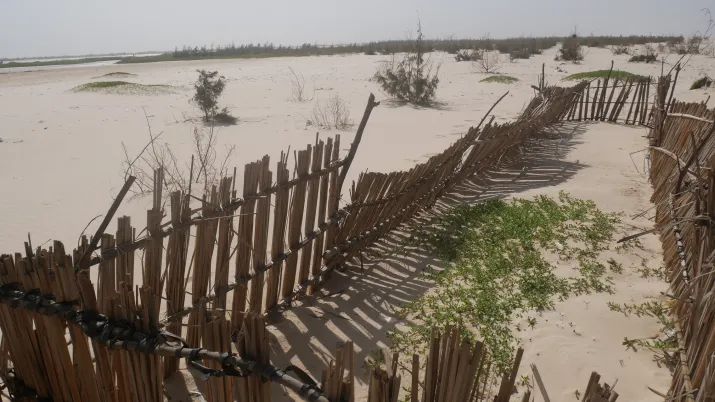
West African coasts are increasingly vulnerable to erosion, marine flooding and the impacts of climate change. The RETCAO project extends the efforts of the WACA program and the WACA FFEM project by focusing on soft solutions led by local communities. By capitalizing on the achievements, particularly those of the Ecological Monitoring Center, it aims to sustainably strengthen the resilience of coastal territories and promote reproducible approaches at the regional level.
Context
In West Africa, coastal areas are subject to increasing pressures related to sea level rise, unsustainable developments and sediment loss. Despite structuring initiatives such as the UEMOA regional programme to combat coastal erosion or the WACA ResIP, vulnerability persists. The WACA FFEM project demonstrated the effectiveness of alternative approaches such as vegetation, development or restoration of natural infrastructure. RETCAO proposes an ambitious second phase, based on lessons learned, to extend the approach to new countries, with a robust methodology, strengthened territorial support and the strategic involvement of the PRCM.
Description
- Develop a unified methodology for participatory diagnosis to assess risks and the feasibility of soft solutions.
- Implement pilot projects to reduce coastal risks in 6 to 10 sites, integrating greening, ecological techniques and flexible arrangements.
- Support local authorities and actors through training and permanent methodological coaching.
- Capitalize on feedback through the production of educational materials, guides and practical documents.
- Disseminate good practices through the PRCM network, ORLOA, learning communities and regional forums such as FOMACO.
Outcomes
- Reduce coastal risks in several vulnerable pilot territories.
- Strengthen local and regional capacities to implement nature-based solutions.
- Strengthen community ownership and better governance of the coastline.
- Produce reproducible tools and set up a task-force of regional experts to promote scaling up.
- Improve the integration of soft solutions into national and regional public policies.
Innovative and exemplary features
The project adopts an unprecedented methodology in the region by identifying priority corridors based on the ecological needs of six key terrestrial and aquatic species.
This integrated and multidisciplinary approach promotes collaborative governance tailored to local environmental contexts and ecological realities.
Sustainable Development Goals
ODD11 Sustainable cities and communities
ODD13 Climate action
ODD14 Life below water
ODD17 Partnerships for the goals
The WACA project, initiator of the RETCAO project
Soft solutions to counter coastal erosion in West Africa
Coastal erosion along the West African coastlines is accelerated by human activity and climate change. To combat this phenomenon, the FFEM is supporting the Dakar Ecological Monitoring Centre in promo...

- When ?
-
2018 - 2022
Status
Completed
- Theme
- Aquatic ecosystems, Climate change
- Location
- Multi-country
- Co-financiers
- Agence Française de Développement (AFD), Centre de suivi écologique (CSE), ClimDev Special Fund, Ministère de la Transition écologique et de la cohésion de territoires, Nordic Development Fund
Pioneering solutions for resilient coastlines
Innovative local initiatives for the resilience of ecosystems and populations
In progress
2022 - 2027
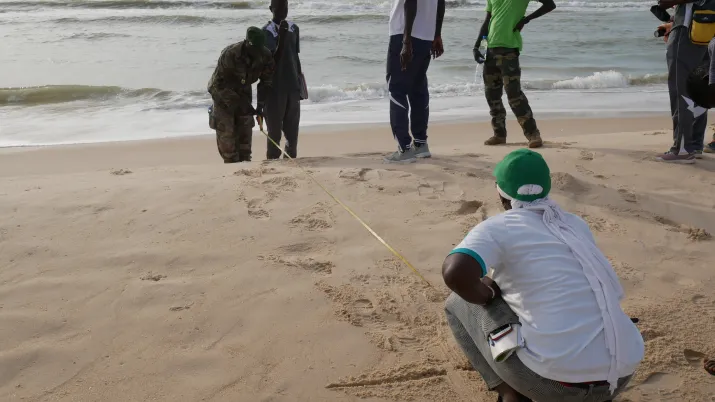
Strengthening Community Resilience to Environmental Vulnerabilities in the Sine Saloum Delta
In progress
2023 - 2027
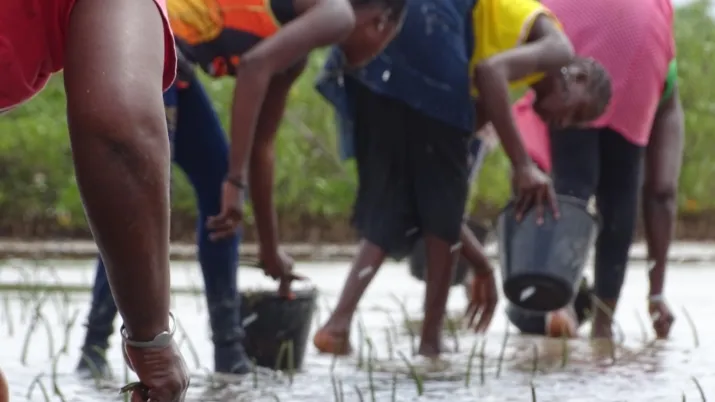
The latest on solutions that are transforming coastlines
The 2026 Regional Marine and Coastal Forum: Ocean Health at the Heart of Future Solutions
Published on April 27, 2026