Share the page

Sustainable and resilient transition of semi-nomadic pastoralism in Mongolia (Nomads For Life)
Project
Published on

-
Project start date
-
Status
In progress
-
Estimated date of project termination
-
-
Project financing date
-
-
Financing duration
-
4 years
-
Type of program
-
FFEM
-
Global financing amount
-
€ 2 630 213
-
FFEM financing amount
-
€ 1 315 000
-
Project lead member institution(s)
-
Ministry of Agriculture and Food sovereignty
-
Country and region
-
Mongolia
-
Type of financing
-
Partners
-
Beneficiaries
-
AVSF
-
Type of beneficiary
-
NGO, Foundation




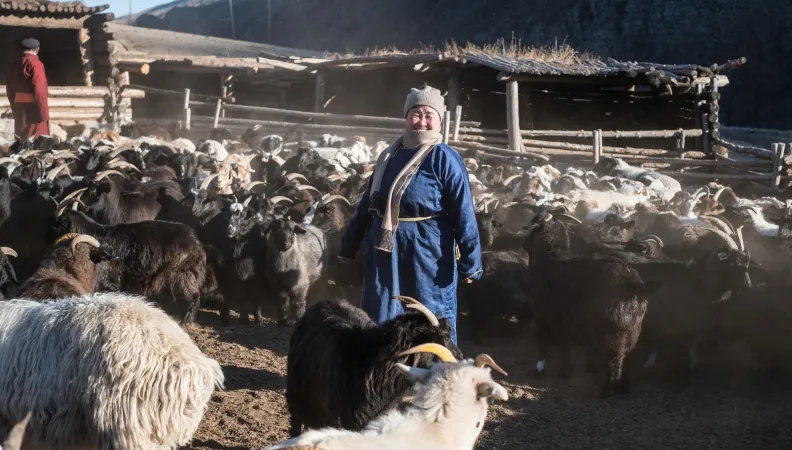
Supporting the transition of Mongolian semi-nomadic livestock farming systems towards greater environmental, social and economic resilience and sustainability. To achieve this, the Nomads For Life (N4L) project relies on consultation and the development of territorial action plans involving public and private actors, the strengthening of livestock cooperatives, the implementation of territorial action research, and advocacy efforts.
Context
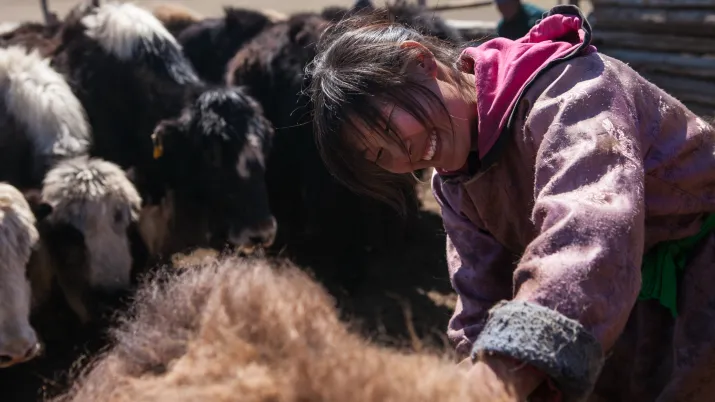
The semi-nomadic livestock farming system is essential to the Mongolian economy but is facing continuous degradation of grazing land, caused by the combined effects of climate change and excessive herd pressure. Furthermore, herders remain poorly organised and receive few external services, making them all the more vulnerable to environmental and economic crises.
Description
- Build a shared vision of sustainability and resilience for livestock farming systems in two regions and develop regional action plans.
- Support economic transition (diversification, access to services, sustainable certification) through livestock farmers' organisations and their cooperatives.
- Strengthen advocacy at local, national and international levels for sustainable and resilient pastoralism.
Results and expected outcomes
- Improve sustainable pasture management on 20% of the land in the two targeted soums.
- Strengthen the climate and social resilience of more than 6,000 people from livestock farming families.
- Produce and disseminate knowledge (at least 6 scientific studies and articles).
- Develop and implement two territorial action plans for sustainable pastoralism.
- Support the transition of livestock farming systems towards greater sustainability and improve marketing through the Eeltei Baylag Secondary Cooperative (EBCN) and labels.
- Strengthen the advocacy and awareness-raising skills and resources of AVSF and its local partners.
Innovative and exemplary features
The innovative nature of the proposal lies in its territorial, participatory and systemic approach, which is still relatively untried in Mongolia and constitutes a relevant way of supporting the transition sought by the authorities at local and national level. The innovation also lies in the partnership between research institutes, livestock farmers and their organisations, and national and international NGOs, which aims to leverage the skills and networks of each party. Finally, it is based on targeted technical experiments tailored to the challenges faced by the territories, in particular actions to regenerate pastures.
Sustainable Development Goals
ODD8 Decent work and economic growth
ODD12 Responsible consumption and production
ODD13 Climate action
ODD15 Life on land