Share the page

Transforming Andean agriculture through pesticide-free commons (One2Zero)
Project
Published on

-
Project start date
-
Status
In progress
-
Estimated date of project termination
-
-
Project financing date
-
-
Financing duration
-
4 years
-
Type of program
-
FFEM
-
Global financing amount
-
€ 2 199 975
-
FFEM financing amount
-
€ 962 687
-
Project lead member institution(s)
-
Ministry of Agriculture and Food sovereignty, French Ministry of Higher Education and Research
-
Country and region
-
Ecuador, Peru
-
Type of financing
-
Beneficiaries
-
IRD
-
Type of beneficiary
-
NGO, Foundation



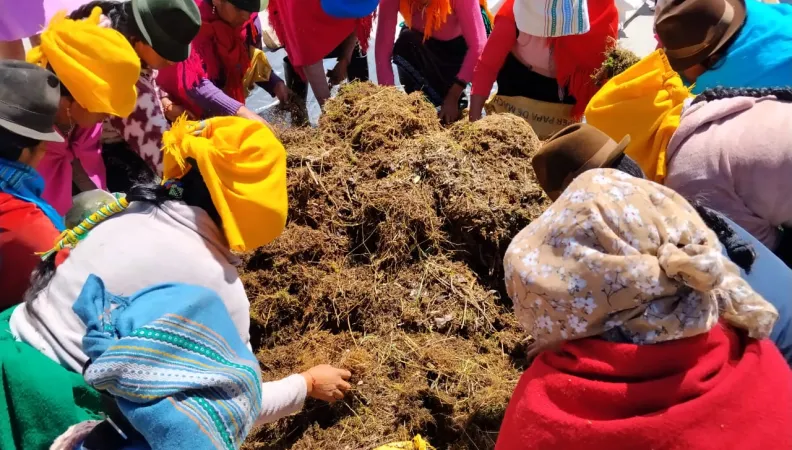
In the Andes of Peru and Ecuador, the widespread use of pesticides poses serious threats to human, animal and environmental health. In this global agrochemical hotspot, the One2Zero project is supporting a sustainable transition towards ‘zero pesticide’ agricultural areas, based on the One Health approach and the management of commons.
Context
In Peru and Ecuador, family farming continues to face persistent rural poverty and increased dependence on intensive production models. In these areas, which are highly exposed to pesticides, the impacts on human and animal health, soil degradation and biodiversity erosion are compromising the sustainability of agricultural systems. This situation calls for a structural transition towards viable agroecological models based on an integrated approach to health, environmental and socio-economic issues (One Health).
Description
- The project is structured around four components:
- Establishing ‘zero pesticide’ areas through agroecological alternatives and collective governance.
- Generating One Health knowledge on the health, environmental and territorial impacts of pesticides.
- Promoting the results and influencing public policy in favour of agroecological transition.
- Capitalising on and disseminating experiences at national and international levels.
Results and expected outcomes
- Gradually reduce pesticide use until it is completely eliminated in the Andean territories, particularly within the Commons.
- Reduce the number of people suffering from diseases linked to pesticide exposure.
- Restore biodiversity and strengthen the resilience of agricultural ecosystems in the Commons territories by integrating the One Health approach.
Innovative and exemplary features
The project breaks new ground by applying the concept of ‘territories’, usually used to manage common goods (water, forests, pastures), to agriculture. It is based on ‘pesticide-free commons’, defined as neighbouring plots of land collectively committed to production without agrochemicals. The project also adopts a One Health approach, which links human health, animal health and ecosystem health. This original combination offers a concrete and reproducible model for accelerating the transition to ‘zero pesticides’ in the Andean territories.
Sustainable Development Goals
ODD3 Good health and well-being
ODD12 Responsible consumption and production
ODD13 Climate action
ODD15 Life on land
Learn more about our projects
One Limpopo One Health: addressing the challenges of human, animal and ecosystem health together
In progress
2023 - 2027