Share the page

Transforming urban mobility in the South (MobiliseYourCity)
Project
This project is carried out with the support of the European Union.


-
Project start date
-
Status
Completed
-
Estimated date of project termination
-
-
Project financing date
-
-
Financing duration
-
3 years
-
Type of program
-
FFEM
-
Global financing amount
-
€ 10 250 000
-
FFEM financing amount
-
€ 2 000 000
-
Project lead member institution(s)
-
Agence française de développement (AFD)
-
Country and region
-
West Africa, Latin America, Asia - Multi-country, Mediterranean
-
Type of financing
-
Partners
-
Beneficiaries
-
AFD



This project is carried out with the support of the European Union.
The content of this project sheet is the sole responsibility of the FFEM and does not necessarily reflect the opinions of the European Union.
Encouraging the implementation of sustainable low-carbon urban mobility policies in emerging and developing countries through an integrated multimodal planning approach at city level and through a sector-based policy framework at national level
Context
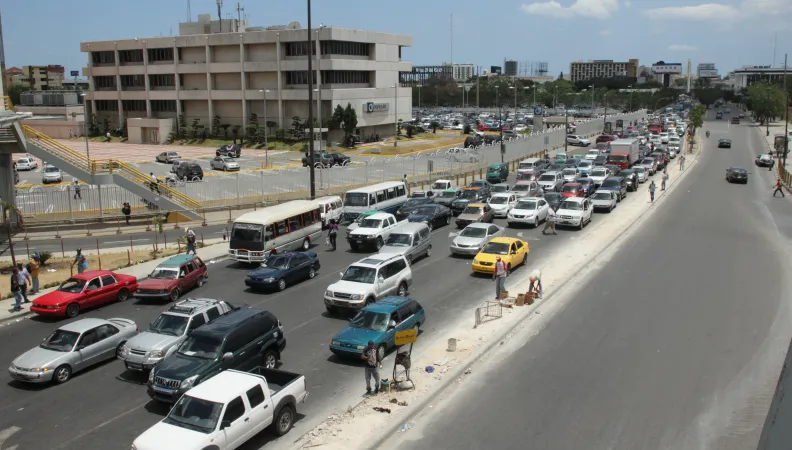
The transport sector generates over 23% of CO2 emissions from the burning of fossil fuels. Urban transportation is responsible for almost half of these emissions. The explosion in urban populations and increasing life expectancy have created a sharp increase in demand for urban mobility, especially in transitional and developing countries, estimated at +140% between 2000 and 2050, nine-tenths of which are in southern countries. On top of the associated greenhouse gas emissions, this creates road congestion issues, made worse by trends in urban development, and public health issues caused by air pollution and road traffic accidents.
There are some solutions available to avoid this disastrous scenario for the climate, economic attractiveness and quality of life in cities: a combination of long-term initiatives on urban planning aimed at avoiding motorised travel (densification, diversity of functions); investment encouraging shifts towards cleaner transportation methods, including public transport and “active” methods (walking and cycling); policies for the restriction of private car usage; and solutions to improve energy efficiency in vehicles and fuels.
It is crucial that developing cities should be provided with support in their transition towards more inclusive and low-carbon transportation, meeting transport demand over the long term while offering mobility solutions with lower emissions. This transition includes integrated mobility planning with “climate” objectives and resources to measure their impact.
Description
The scheme involves eight countries in Africa, Latin America and Asia, including four countries (Cameroon, Morocco, Tunisia and Senegal) which have already been earmarked to receive support funded by the FFEM.
The five components of the scheme consist of:
- introducing and promoting a methodological framework tailored to the challenges and constraints experienced by southern countries for the planning and improvement of urban mobility at both national and local level;
- strengthening the ability of those involved in implementing national policy and local mobility plans;
- supporting the drafting and implementation of SUMP in partner cities and NUMP in partner countries;
- facilitating access to funding for the implementation of SUMPs and NUMPs;
- monitoring and consolidating the impact of mobility policies in partner cities and countries;
- providing the ability to manage, coordinate, mobilise partners and monitor the MobiliseYourCity initiative.
Outcomes
The initial funds financed by the FFEM provide support for the pilot phase of the initiative, with the objective of expanding it after 2018. The work with the pilot cities and countries should serve as an example and motivate other countries and cities into joining the initiative. MYC is seeking to involve at least a hundred cities in twenty countries by 2020, with the aim of sustainably transforming urban mobility over a large area in southern countries.
The international platform is intended to be a forum for intense discussion over good practices in terms of planning, and planning tools developed as part of the initiative (SUMP and NUMP drafting guidelines, training materials, prepared notes on specific elements, etc.) are be available to partner cities and countries seeking guidance.
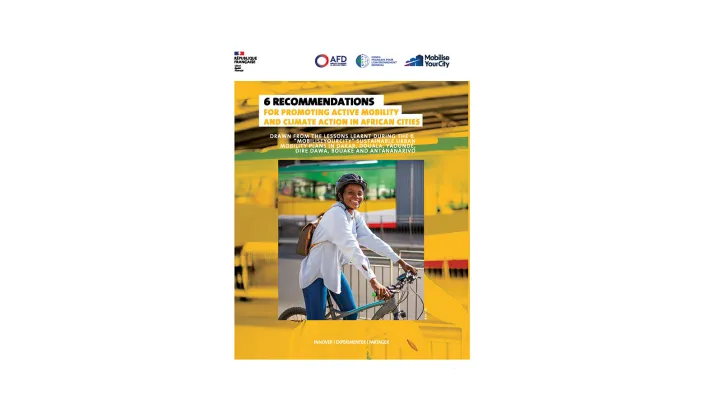
Discover the booklet containing 6 recommendations from our capitalization
Innovative character and exemplary
To date, few countries in the Global South have urban mobility planning tools that integrate all modes of transport, or that combine ‘soft’ measures and infrastructure programmes within a single policy; few have set a target for reducing GHG emissions and put in place the means to measure progress towards that target. This is precisely the added value of a SUMP. MYC aims to overhaul the methodology for SUMPs and NUMPs, notably by proposing several entry points for SUMPs depending on the maturity of cities’ transport systems, whilst also contributing to the transformation of transport authorities at both local and national levels.
The programme will prioritise SUMPs that build on recent or ongoing urban development plans, as is the case in Sousse, Dakar, Douala and, to a certain extent, Casablanca.
The programme may also help to raise awareness amongst decision-makers and professionals in urban planning and mobility regarding issues of urban planning–transport coordination. This will be the case, in particular, for the training session planned in Senegal.
The selection of candidate cities and countries for these planning efforts – namely cities of various sizes in developing and transition economies – will enable this methodology to be tested and validated.
Sustainable Development Goals
ODD9 Industry, innovation and infrastructure
ODD11 Sustainable cities and communities
ODD12 Responsible consumption and production
ODD13 Climate action