Share the page

Preserving the forests of the Congo Basin to build sustainable regions (Cap Forêts)
Project
This project is carried out with the support of the European Union.


-
Project start date
-
Status
In progress
-
Estimated date of project termination
-
-
Project financing date
-
-
Financing duration
-
3 years
-
Type of program
-
FFEM
-
Global financing amount
-
€ 4 008 000
-
FFEM financing amount
-
€ 1 999 000
-
Project lead member institution(s)
-
French Ministry of the Ecological Transition
-
Country and region
-
Congo Basin
-
Type of financing
-
Beneficiaries
-
International Tropical Timber Technical Association (ATIBT)
-
Type of beneficiary
-
NGO, Foundation



This project is carried out with the support of the European Union.
The content of this project sheet is the sole responsibility of the FFEM and does not necessarily reflect the opinions of the European Union.
CAP FORÊT is supporting the transformation of the forestry concession model in the Congo Basin towards a more integrated, resilient and inclusive approach to land management, balancing forestry production, biodiversity, climate and local development.
Context
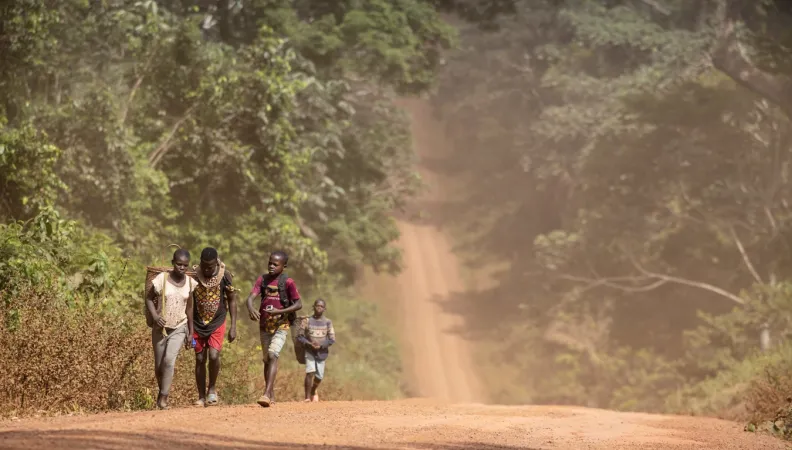
The forests of the Congo Basin cover nearly 300 million hectares and play a major role in the climate, biodiversity and economies of Central Africa. Despite the progress made in sustainable management, certification and traceability, they face new challenges: pressure on land, changing markets, climate and biodiversity issues, economic diversification and local development. Cap Forêts is therefore supporting the transition of concessions towards sustainable management that is more closely integrated with the local areas.
Description
The project is organised around four components:
- Sustainable, diversified and inclusive forest management: improved knowledge of tree species, promotion of lesser-known species and the evolution of forest management models.
- Stronger territorial and social integration of concessions: dialogue between concession holders, communities and public bodies, and the trialling of ‘zero deforestation’ local development models.
- Innovative financing for carbon and biodiversity: piloting carbon credits and biodiversity certificates, incorporating in particular the issue of revenue sharing.
- Capitalising on and disseminating lessons learnt: dialogue with government bodies, sharing of results and regional advocacy to ensure the long-term sustainability and wider adoption of the approaches developed.
Results and expected outcomes
- More sustainable and diversified forest management, helping to preserve the ecosystems of the Congo Basin.
- More inclusive local development, involving communities more closely and aligned with the dynamics of forestry concessions.
- An economic model that better integrates environmental and social benefits, through innovative financing mechanisms for carbon and biodiversity.
- A sustainable forestry sector that is better promoted at regional level, through the sharing of best practice and strengthened cooperation between stakeholders.
Innovative and exemplary features
CAP FORÊT’s innovation lies in a renewed vision of the forestry concession, viewed as extending beyond its operational boundaries and integrated into the economic, social and environmental dynamics of the regions. Cameroon serves as a pilot region for testing, under real-world conditions, solutions that can be transferred and adapted to other forestry contexts. The regional dimension of the project, led by the Central African Forest Commission (COMIFAC), promotes the adoption and dissemination of these solutions across the Congo Basin.
Discover the video of our capitalization "In Focus the sustainable management of forests in Central Africa"
Sustainable Development Goals
ODD8 Decent work and economic growth
ODD12 Responsible consumption and production
ODD13 Climate action
ODD15 Life on land
ODD17 Partnerships for the goals
Solutions to preserve tropical forests and support sustainable communities
Protecting the Amazon forests and strengthening communities in Colombia and Peru
In progress
2025 - 2028
Towards participatory and sustainable forest management in the Maya Biosphere Reserve
In progress
2025 - 2028
Promoting and formalising artisanal wood logging to reduce forest degradation
In progress
2019 - 2023