Share the page
From buildings to cities, solutions for low-carbon living environments adapted to climate issues
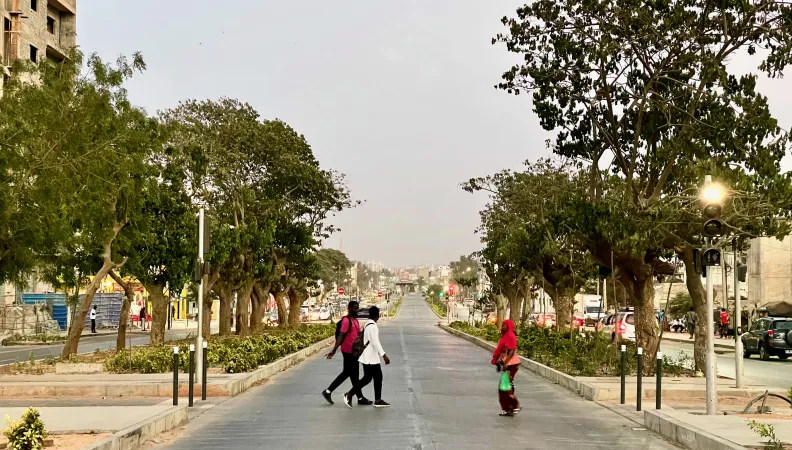
In the context of COP31, which is being held in Antalya, habitat and sustainable urban development are among the priorities of the Agenda for Climate Action. Enabling everyone to access decent and resilient housing in the face of climate shocks requires rethinking construction methods and land planning. Through its projects, the French Global Environment Facility (FFEM) and its partners support innovative solutions that enhance local resources, reduce the carbon footprint of buildings and strengthen the resilience of cities.
Nearly 3.4 billion people lack access to safe, secure and adequate housing (UN-Habitat). Moreover, the housing sector accounts for about 20% of global greenhouse gas emissions. Buildings and cities are also exposed to the impacts of climate change, including hot weather and flooding.
Reconciling access to affordable housing, emissions reduction and climate adaptation is therefore a major challenge. To answer this question, three levers of action are emerging, from the choice of materials to the development of cities.
The use of local and bio-based materials reduces the carbon footprint of buildings, limits transport costs and improves thermal comfort, while supporting local economic sectors.
In the Senegal River basin, typha, an invasive plant that proliferates along rivers, illustrates the potential of these resources. Following the Typha Combustible Construction West Africa (TyCCAO) project, carried out in Senegal and Mauritania, new initiatives supported by the FFEM are exploring the possibilities offered by this plant and other bio-based or geosourced materials, such as raw earth.
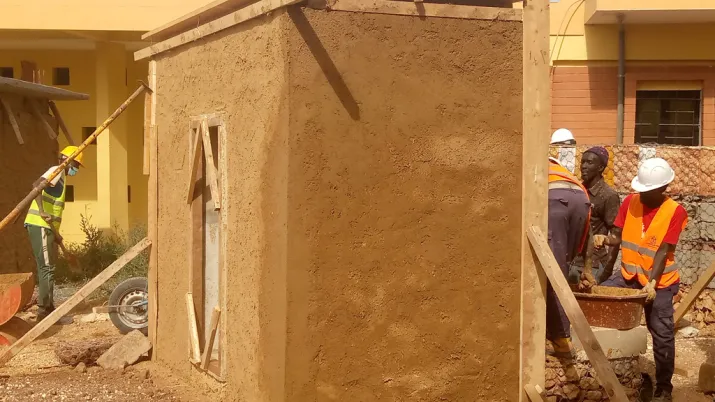
In Senegal, the PHARD project, supported alongside the Agency for the Ecological Transition (ADEME) and led by Architecture and Development, is facilitating low-income households' access to affordable and resilient housing. It provides for the construction of 50 demonstrator social housing units, mainly from local and bio-based materials, within an ecocity whose urban and architectural design it also supports.
The support of the FFEM allowed us to register in support of Senegal’s public policies in favor of an urban transition adapted to climate change. With PHARD, we contribute to developing innovative low-carbon design tools and methods for urban planning and affordable housing. Their adoption by the technical agencies and the developer makes this project a demonstrator with strong leverage.
This ambition is shared by the Société d'Aménagement Foncier et de Rénovation Urbaine (SAFRU), a Senegalese partner in the project, which helps to integrate these solutions into urban planning practices.
Relying on partners such as the FFEM, SAFRU develops and tests innovative solutions to build more resilient and less carbon-emitting cities in Senegal. With the PHARD project, we are integrating climate issues into urban planning and preparing for their deployment on a larger scale. Our ambition is to demonstrate that African urban models can combine economic attractiveness, social inclusion and ecological transition, while inspiring other territories.

In the town of Ndiob, also in Senegal, the CoCliCo project (Construction without Air Conditioning and Comfort) aims to demonstrate that it is possible to build without air conditioning while ensuring the comfort of the inhabitants. It combines materials with high hygrothermal power, natural cooling and greening of buildings and their environment. By combining scientific approach, bioclimatic architecture and local constructive practices, it aims to develop solutions adapted to the climatic conditions and to promote the emergence of a dedicated sector.
To spread these solutions to as many people as possible, their development must be accompanied by structured professional sectors and sustainable financing mechanisms. The challenge is to make eco-construction economically accessible and to change the practices of the sector.
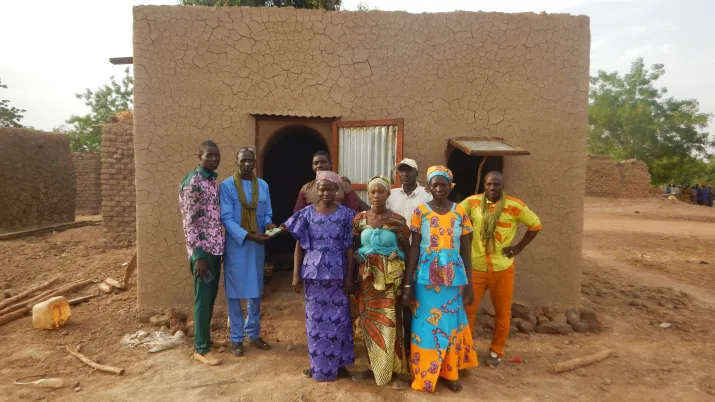
The ACACIAS project, carried out with the association La Voûte Nubienne, aims to mobilize the carbon market to finance incentives for eco-construction, particularly in Benin and Ghana. It promotes the development of housing in rural and semi-rural areas through a traditional technique based on raw earth, which allows to build roofs adapted to the climatic conditions of the Sahel. It thus values local know-how while exploring new financing mechanisms to accelerate its deployment.
In eleven countries, the PEEB Cool program supports the adaptation of buildings to high temperatures. It supports demonstrative and reproducible projects combining bioclimatic design and technologies using natural refrigerants. Launched in 2018 as part of the Franco-German cooperation, the Programme for Energy Efficiency in Buildings (PEEB), of which PEEB Cool is a sequel, illustrates the mobilization of complementary expertise to transform the construction sector.
Knowledge sharing also contributes to the change of scale.
In 2025, the FFEM and the French Agency for Development (AFD) organized 3 webinars dedicated to eco-construction and its deployment conditions. They brought together public and private actors, researchers and practitioners to share experiences and solutions.
The transformation of housing cannot be limited to the building scale. Urbanization is placing increasing pressure on natural ecosystems, which help to regulate temperatures, prevent flooding, and conserve water resources and food security. Integrating nature into urban planning thus constitutes a lever for strengthening the resilience of cities, preserving biodiversity and improving the living environment.
For more than ten years, projects supported by the FFEM and its partners have been experimenting with solutions that benefit nature in the city. The experiences of the Guatemala City Green Belts and the Santa Fe West Nature Reserve in Argentina have fed into a capitalization process, with recommendations on how to reintroduce, preserve and restore nature in urban spaces in Latin America.
Discover our insights on integrating nature into cities in Latin America
In Guatemala, a new project aims to consolidate and deploy nature-based solutions to rapid urbanization and climate risks. It notably provides for the creation of new parks in the central metropolis and regulatory support, with the ambition to spread these approaches to other cities in the country and the region.
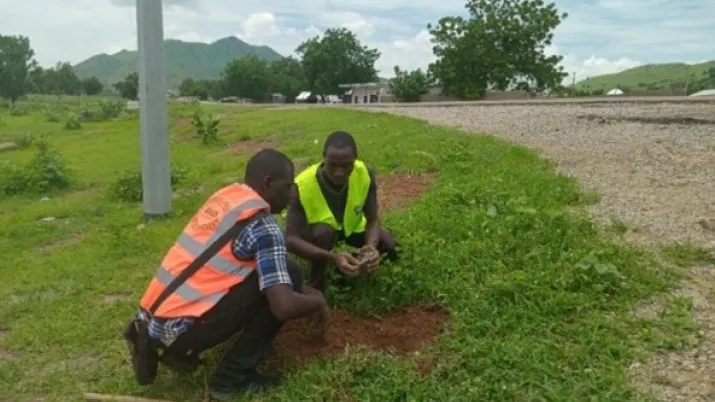
In Cameroon, in the Far North, the Maroua Ville Verte project supports more resilient urbanization in a territory that is particularly vulnerable to climate change. While the population of Maroua is expected to double by 2050, it plans to plant 140,000 trees and 60,000 shrubs, as well as improvements to improve water management. Vegetation, urban planning and development of the green economy thus contribute to strengthening the resilience of the territory and the living conditions of its inhabitants.
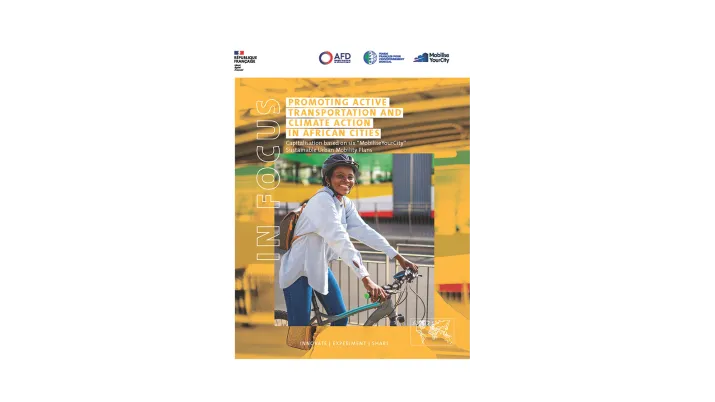
The transformation of cities also involves the evolution of mobility. In Africa, through the ARENDDRE project, the FFEM supports the city of Nouakchott to combine sustainable mobility and improvement of the living environment. A capitalization carried out with MobiliseYourCity, the ministry in charge of the Ecological Transition and the AFD analyses six Sustainable Urban Mobility Plans in five countries. It highlights the role of walking and cycling in reducing greenhouse gas emissions and climate adaptation, and makes six recommendations to better integrate these issues into mobility planning.
Discover our knowledge-sharing work alongside our partner MobiliseYourCity
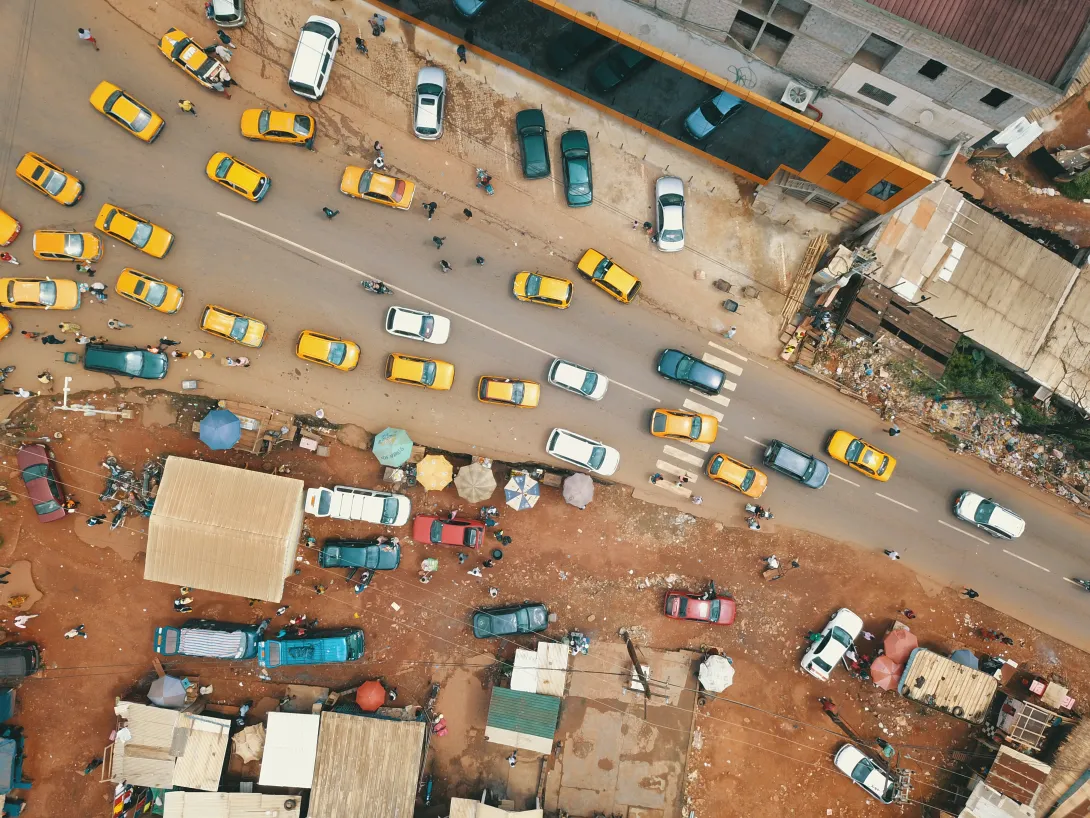
Building sustainable living environments is therefore not just about building differently: it requires rethinking the relationships between buildings, people and ecosystems. By combining international expertise, local know-how and innovation, the projects supported by the FFEM and its partners contribute to the emergence and dissemination of solutions adapted to the territories. They illustrate the value of an integrated approach, which links decarbonization, climate adaptation and biodiversity conservation, from housing to the territorial scale.
Discover our projects related to housing and cities
Explore our publications on cities

IN FOCUS : Promoting active transportation and climate action in african cities
Published on September 9, 2026