Share the page
Energy transition projects: signing of two agreements with ADEME
Published on
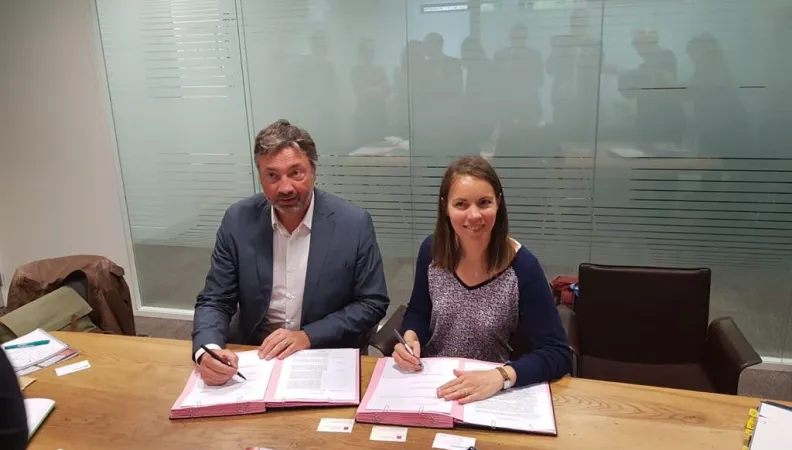
On May 16, the FFEM and ADEME signed two funding agreements for the TyCCAO and ACT-DDPP projects.
On Thursday, FFEM Secretary General Stéphanie Bouziges-Eschmann and ADEME President Arnaud Leroy signed financing agreements for two projects contributing to the energy transition in developing and emerging countries.
The first financing agreement concerned the Typha Combustible Construction Afrique de l’Ouest (TyCCAO) project. The aim of this project is to develop the use of renewable fuel and energy efficiency in buildings in Senegal and Mauritania through the use of typha. This reed, which is found in large quantities in the region, is transformed into biochar and can thus be used as a substitute for charcoal, helping to combat greenhouse gas emissions and deforestation. It also has insulating properties that make it an ideal natural building material.
The ACT-DDPP project, born out of the synergy between ADEME's Assessing Low Carbon Transition initiative and the Deep Decarbonization Pathways Project led by the Institute for Sustainable Development and International Relations (IDDRI), was the subject of the second agreement. The project contributes to reducing greenhouse gas emissions by promoting coordination between government actors and businesses in Mexico and Brazil. It aims to develop and promote tools that facilitate dialogue between businesses and governments so that these actors can coordinate their decarbonization strategies.
Learn more about the project
Typha, an Invasive Reed as a Renewable Fuel and Eco-Material
The Typha Combustible Construction West Africa (TyCCAO) project contributes to the energy transition and the fight against climate change by promoting the use of renewable biofuels and energy efficien...

- When ?
-
2019 - 2024
Status
Completed
- Theme
- Villes et territoires, Changement climatique
- Location
- Senegal, Mauritania
- Co-financiers
- ARENE, GRET, MEDD Sénégal, OMVS, Union Européenne (UE), Agence de la transition écologique (ADEME)
Focus on our projects
Preserve and manage of wetlands for the metropolitan balance of Mexico City (XOCHIMILCO)
Completed
2016 - 2026