Share the page
World Mother Earth Day: Producing Differently—Fair Trade in Support of Biodiversity
Published on
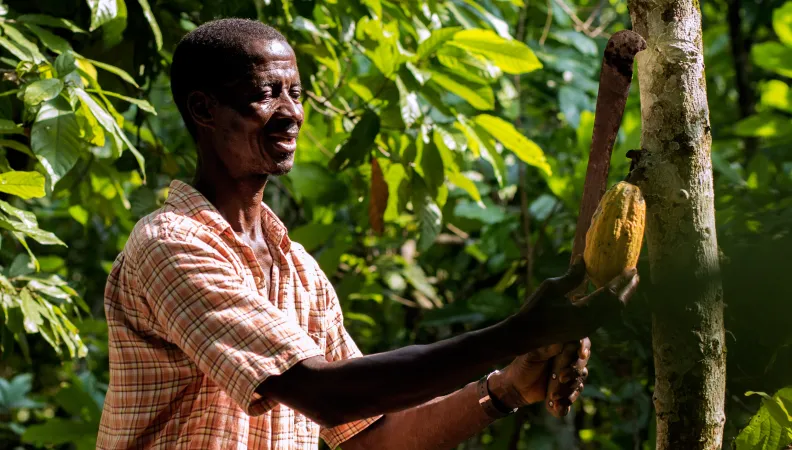
Every year, International Mother Earth Day reminds us of the urgent need to take action in the face of environmental imbalances that affect millions of people and living species around the world. Deforestation, intensive agriculture, and the illegal exploitation of natural resources weaken ecosystems and accelerate their degradation.
This day invites us to fundamentally rethink our relationship with the planet and to build development models that are more respectful of life. In this context, the ÉQUITÉ program, supported by the FFEM, has been working since 2015 with cooperatives and fair trade actors in West Africa to develop sustainable, inclusive supply chains that respect biodiversity.
Initially conceived as a pilot project, ÉQUITÉ has gradually evolved as its results have demonstrated the relevance of the approach. Building on this success, the FFEM, alongside committed partners such as Commerce Équitable France, Agronomes et Vétérinaires Sans Frontières (AVSF), and the Plateforme Française du Commerce Équitable (PFCE), decided to support its continuation and expansion. From an experimental project, ÉQUITÉ has thus become a program structured in three successive phases—ÉQUITÉ, ÉQUITÉ II, and ÉQUITÉ CACAO—illustrating a gradual scaling up of interventions.
An initial pilot phase (ÉQUITÉ)
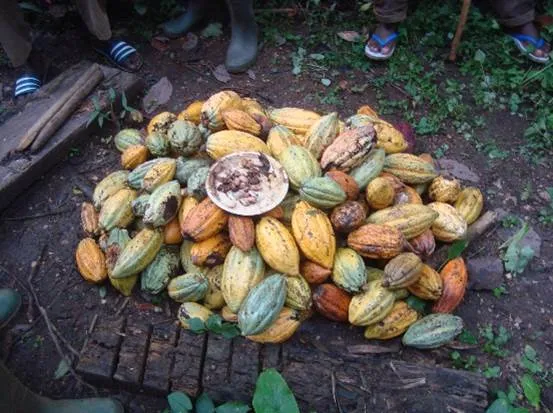
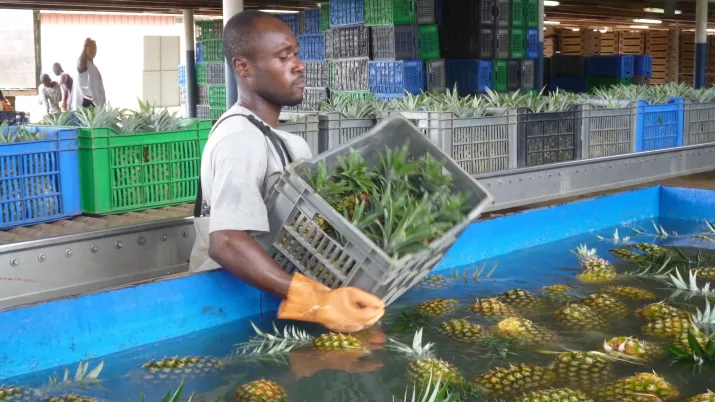
The initial ÉQUITÉ project tested an innovative approach to making fair trade a driver of sustainable development that integrates biodiversity issues in West Africa. Five supply chains were supported—cocoa, shea, fruits (mango, pineapple), cashews, and handicrafts—with a central objective: to strengthen the capacities of producer organizations.
This work focused on improving production practices, quality and land management, market access, and the gradual integration of environmental considerations. While the impacts of fair trade on biodiversity remain poorly documented, the evolution of its environmental standards opens up promising prospects.
Consolidate and expand on existing achievements (ÉQUITÉ II)
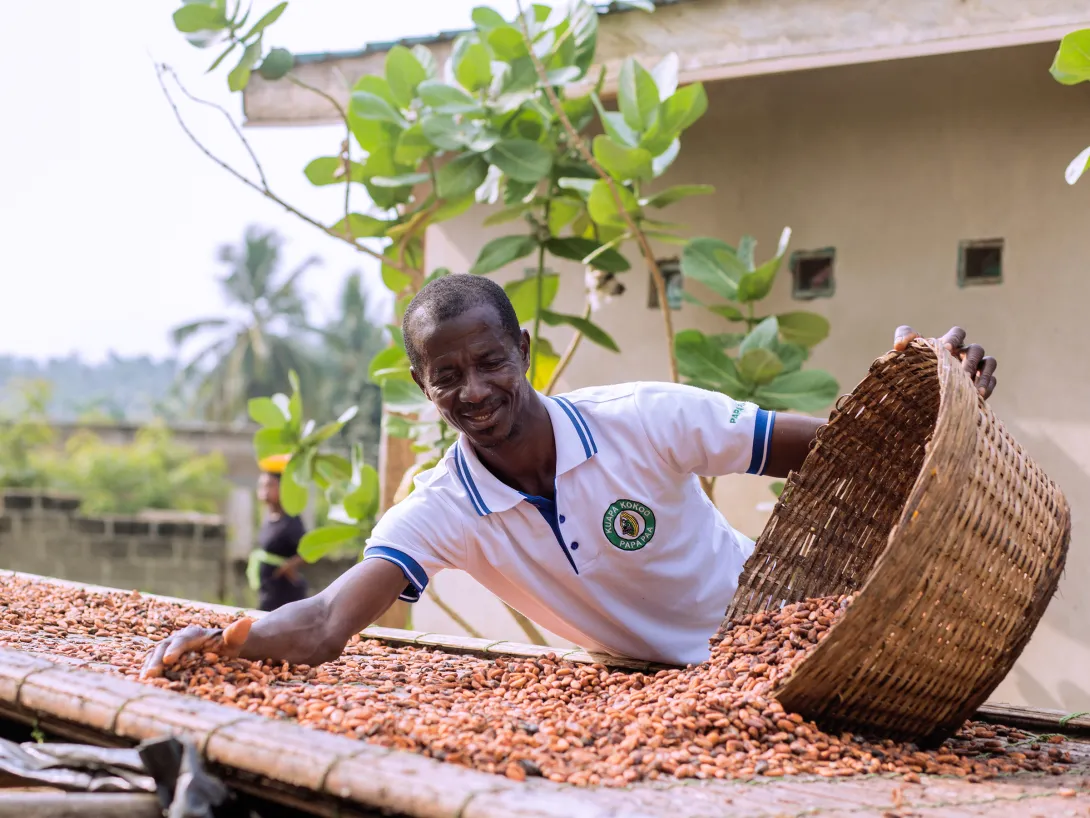
Following the promising results of its first pilot phase, the FFEM supported a second phase aimed at consolidating and expanding on these achievements. The ÉQUITÉ II project is part of a broader effort to accelerate fair trade, driven by growing demand and the integration of stricter environmental standards.
This phase deepens the structuring of supply chains and strengthens the role of fair trade as a lever for the sustainable management of natural resources. It also contributes to job creation in rural areas, the fight against deforestation, and the promotion of gender equality.
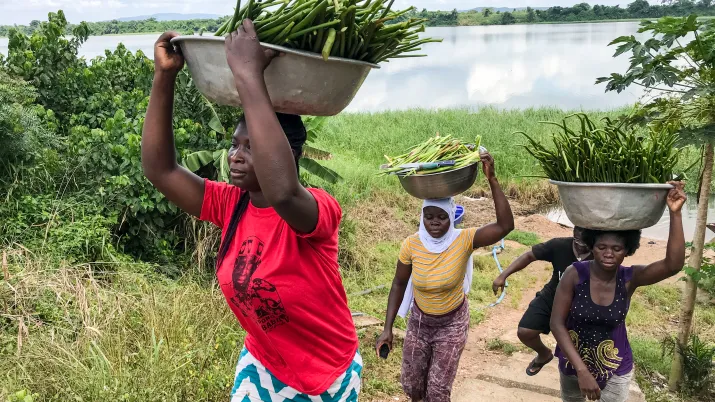
The supply chains exhibit distinct dynamics: shea and handicrafts are predominantly driven by women, while the cocoa sector remains largely male-dominated. The project thus also acts as a lever for economic inclusion.
ÉQUITÉ II also stands out for the implementation of innovative mechanisms, notably financial facilities to support innovations—including digital ones—by producer organizations, as well as a pilot fund dedicated to the agroecological transition.
Thanks to the support of the Équité II project, we have been able to establish and strengthen the Fair Trade platform. This has enabled our organization to grow and become more structured within the network. Today, Equité’s support enables us to continue our development, consolidate our certification, and better support producers in the field. Additionally, the umbrella organization supports certified organic and Fair Trade producers, notably through the creation of a bio-inputs production unit, funded by Equité II. Thus, the cooperative facilitates access to bio-inputs through a pre-financing system: producers do not need to advance the costs, which are deducted directly at the time of sale of their produce. The network also covers the cost of certifications, both organic and fair trade.
Positioned as a key priority: toward zero-deforestation cocoa (ÉQUITÉ CACAO)
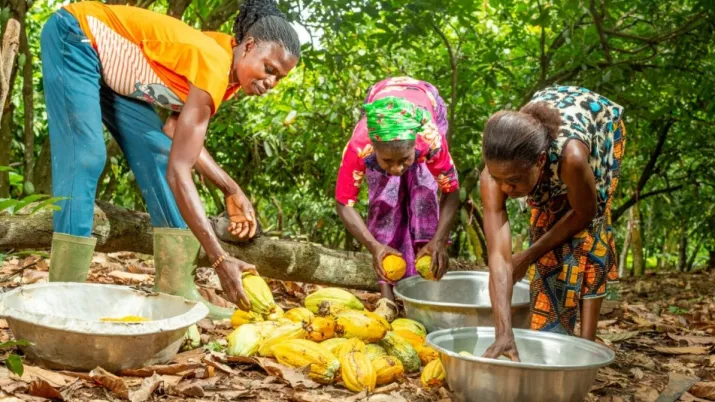
Building on this momentum, a third phase of the program, launched last year and running through 2029, focuses on a strategic sector: cocoa. Ghana and Côte d’Ivoire account for nearly 60% of global cocoa production, but this sector is also one of the main drivers of deforestation, particularly in Côte d’Ivoire. In this context, stabilizing production areas and supporting their transition has become a major challenge.
The ÉQUITÉ CACAO project thus aims to:
- Strengthen the capacities of fair-trade cocoa producer organizations to achieve zero-deforestation, agroforestry, and organic production;
- Professionalize fair-trade stakeholders;
- Consolidate fair trade as a tool for reducing inequalities.
The approach is based in particular on promoting agroecological practices and developing agroforestry systems, thereby strengthening the resilience of plantations and producers in the face of the effects of climate change.
A program designed to facilitate gradual transformation
Between 2015 and 2029, the various phases of ÉQUITÉ reflect a process of learning and gradual expansion. Building on an initial successful pilot, the program has been structured, expanded, and then specialized to address increasingly specific challenges.
By supporting this growth over the past 10 years, the FFEM has helped foster fair trade models that are more resilient, inclusive, and respectful of natural resources.
This trajectory fully illustrates the FFEM’s added value: supporting innovation, drawing concrete lessons from it, and then supporting its deployment on a larger scale to address global challenges.
The Équité project is actively committed to ensuring fairer compensation for producers and a sustainable improvement in their living conditions. By promoting responsible agricultural practices, it enhances supply chain traceability and fosters more balanced relationships among all stakeholders. In the cocoa sector, Équité plays a key role by supporting the transition to a “zero deforestation” model and helping cooperatives comply with regulations such as RDUE and ARS1000. The goal is clear: to ensure that cocoa comes from forest-friendly plots. Since its launch, the Équité Cacao program has already mobilized 12 producer organizations committed to promoting agroecological innovations. A comprehensive approach that combines environmental impact, social progress, and economic performance.

Discover the projects
A few "Équité en Action" experience capitalisation
Discover the "Équité" program
Accelerating the ecological and social transition in West Africa through fair trade