Share the page

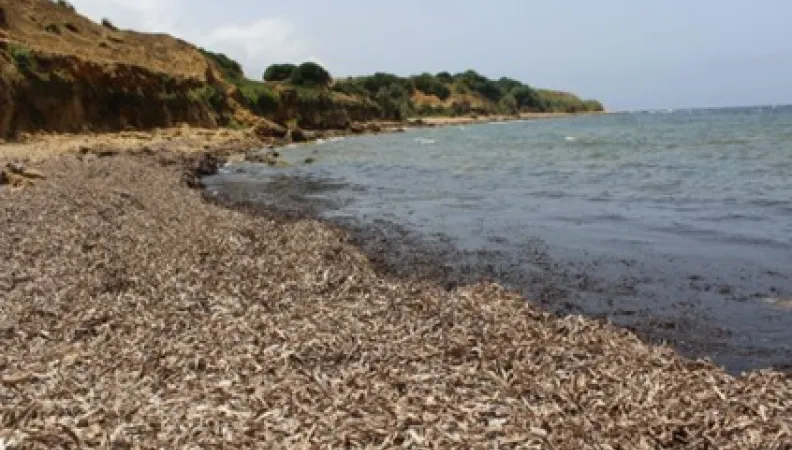
Preserving Posidonia and promoting blue carbon for sustainable fishing and resilient coastlines in Tunisia (PENELOPE)
Project
Published on

-
Project start date
-
Status
In progress
-
Estimated date of project termination
-
-
Project financing date
-
-
Financing duration
-
3 years
-
Type of program
-
FFEM
-
Global financing amount
-
€ 2 000 000
-
FFEM financing amount
-
€ 1 000 000
-
Project lead member institution(s)
-
French Ministry of the Ecological Transition
-
Country and region
-
Tunisia
-
Type of financing
-
Beneficiaries
-
WWF France
-
Type of beneficiary
-
NGO, Foundation


The project supports sustainable coastal management by promoting these essential marine ecosystems, which are genuine blue carbon sinks, while strengthening their protection and raising public awareness.
Context
Seagrass beds are part of blue carbon ecosystems, along with salt marshes and mangroves, which are essential for carbon sequestration and biodiversity conservation. In the Mediterranean, although Tunisia is home to more than half of the Posidonia seagrass beds, knowledge about their condition remains limited and legal protection insufficient. Opportunities are emerging, particularly with carbon finance, to revitalize these vital ecosystems, which are among the most powerful carbon sinks in the biosphere and play an essential role in mitigating climate change.
Description
The project focuses on four areas:
- Improving and sharing knowledge about Posidonia seagrass beds in Tunisia.
- Contributing to their conservation by reducing pressures, particularly those related to fishing, and by developing blue carbon mechanisms.
- Strengthening their legal protection and integration into national climate and energy strategies.
- Informing and raising public awareness of the services provided by seagrass beds.
Results and expected outcomes
- An updated map of seagrass beds and pressures, widely distributed.
- A structured, operational, and sustainable national network for monitoring Posidonia.
- Concrete fisheries management measures to preserve Posidonia within more resilient coastal communities.
- Known Posidonia carbon stocks and a first carbon fund created in Tunisia.
- A bill for the protection of Posidonia in preparation.
- Public awareness raised, notably through an exhibition at the Cité des Sciences.
- Capitalization and dissemination via the Mediterranean Posidonia Network.
Innovative and exemplary features
The project combines Posidonia conservation and outreach work with fishermen to promote sustainable fishing practices. It introduces financing mechanisms, ranging from transition funds to the creation of blue micro-enterprises, while promoting blue carbon credits. This approach can be adapted to various sites in Tunisia and neighboring Mediterranean countries.
It establishes voluntary no-take zones managed by fishermen and assesses carbon stocks at pilot sites.
Finally, through participatory processes and technical workshops across the Mediterranean Posidonia Network (MPN), it promotes the replication and transfer of these initiatives to other Mediterranean regions.
Read the joint press release from FFEM and WWF France
Sustainable Development Goals
ODD8 Decent work and economic growth
ODD13 Climate action
ODD14 Life below water
ODD15 Life on land
ODD17 Partnerships for the goals
Marine biodiversity and blue carbon
Developing hybrid governance to protect and manage special areas of the high seas
In progress
2021 - 2027
Integrating scientific output on coastal and marine areas into decision-making
Completed
2021 - 2024
Ocean and climate news
The 2026 Regional Marine and Coastal Forum: Ocean Health at the Heart of Future Solutions
Published on April 27, 2026
After 6 years of partnership, the participative governance of Mediterranean MPAs shows promising results
Published on April 29, 2024