Search results
Restoration, conservation and sustainable management of mangroves to combat global warming
In decline, mangroves play a crucial role in the fight against global warming and their resources are central to the lives of the local communities in Costa Rica and Benin. By supporting this restorat...
Project
Published on

Contributing to the development of agroecology in dry areas
Faced with the challenge of climate change, agroecology offers a solution - especially in dry areas - but remains very poorly funded and rarely receives public authority support. To contribute to its...
Project
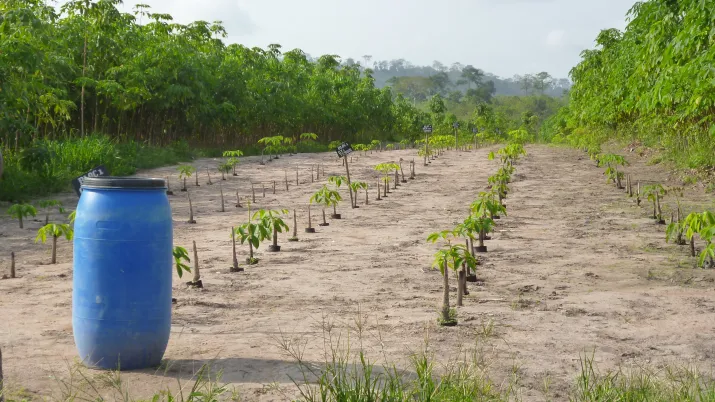
In Cuba, nature-based solutions for a littoral more resilient to climate change (Résilience bleue)
The Résilience bleue (or blue resilience)project strengthens ecological and community resilience by using nature-based solutions in the two largest island countries of the Caribbean, Cuba and the Domi...
Project
Published on
Conserving and developing biodiversity in the Balkan mountains
Combining biodiversity conservation and sustainable economic development by developing the promotion of local products and the patrimony in the Balkan mountains.
Project

The FFEM unveils its new capitalization initiative : "IN FOCUS - Carbon finance : a level for a sustainable fu...
On January 21 in Paris, the French Facility for Global Environment (FFEM) organized a hybrid event to mark the publication of its capitalization work "In Focus carbon finance: a powerful tool for a su...
News
Published on
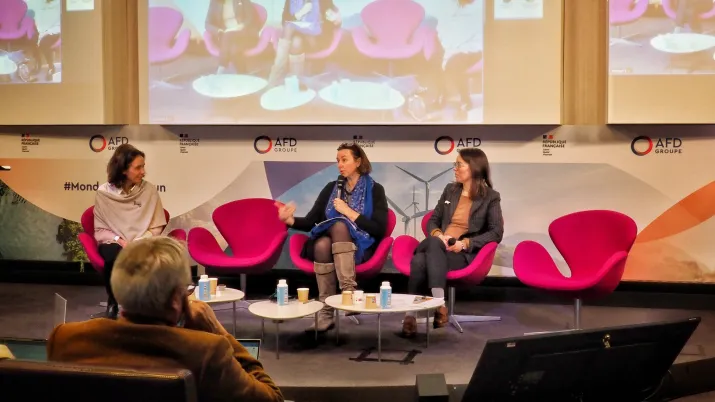
CLOSED - Call for project proposals “One Health”
The call for projects seeks to encourage field-based actions founded on holistic approaches which uphold the intrinsic links between the three health - human health, animal health and the health of ec...
Editorial page

Stéphanie Bouziges-Eschmann: “the ffem has been producing innovative ideas for the environment for 25 years”
The French Facility for Global Environment (FFEM) was launched after the first Earth Summit, in 1994. Since then, it has worked towards a single goal: to create synergies between environmental preserv...
News
Published on

The PPI, a tool for African CSOs
Since 2006, The Small-Scale Initiatives Program (PPI), supported by the FFEM and implemented by the French Committee of the IUCN in West Africa and in Central Africa, and in North Africa through UICN...
Editorial page

Submit a project
FFEM’s financing focuses on six areas of activity, related to the main international conventions or agreements: biodiversity, climate, international waters, land degradation – including deforestation,...
Editorial page

Frequently asked questions
Find all the answers to the most frequently asked questions about FFEM and how it works.
Editorial page

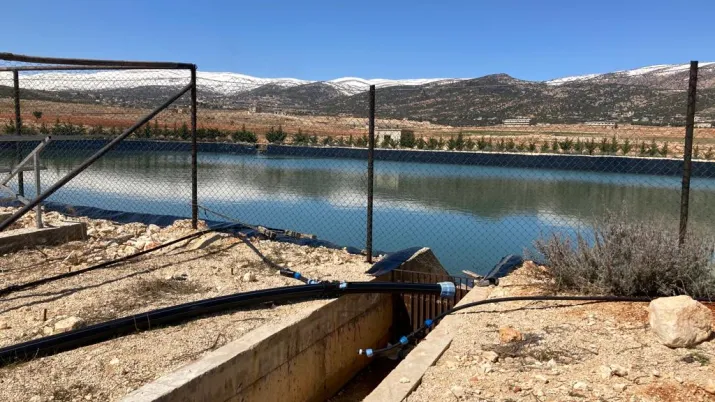
Co-create and raise awareness to improve agricultural system resilience
In Egypt and Lebanon, water stress, desertification and over-exploitation of the water table are damaging agriculture. The FFEM is supporting the SupMed project in order to reduce this over-exploitati...
Project
African civil society’s involvement in Nature Conservation: the newly-launched website of the Small-scale Ini...
Paris, 11 March 2021 – Six months ahead of the IUCN’s World Conservation Congress, to be held in Marseille in September 2021, the Small-scale Initiatives Programme (PPI), run by the IUCN’s French Nati...
Press release

Adaptation and low-carbon transition in cities and territories
Greenhouse gas emissions continue to rise, especially in cities where more than 55% of the world’s population currently resides, and where an estimated 68% will reside by 2050. These urban areas are h...
Publication
Published on

Aquatic ecosystems resilience brochure
High seas, coastlines, wetlands, and freshwater hydrosystems: their role is crucial for climate regulation. By causing ocean acidification or sea level rise, anthropogenic pressures threaten these nat...
Publication
Published on

Sustainable management of agricultural and forests landscapes
As the primary reservoir of terrestrial biodiversity, forests, along with lands, serve as a powerful lever for climate regulation. Agricultural-related deforestation accounts for nearly a quarter of a...
Publication
Published on
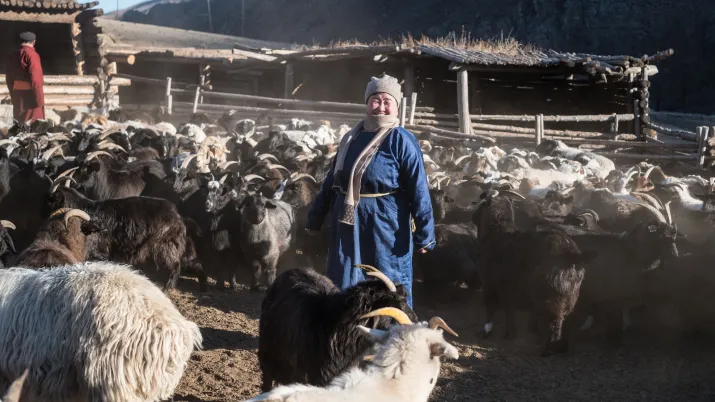
Sustainable transition of semi-nomadic pastoralism in Mongolia
Supporting the transition of Mongolian semi-nomadic livestock farming systems towards greater environmental, social and economic resilience and sustainability. To achieve this, the Nomads For Life (N4...
Project
Published on
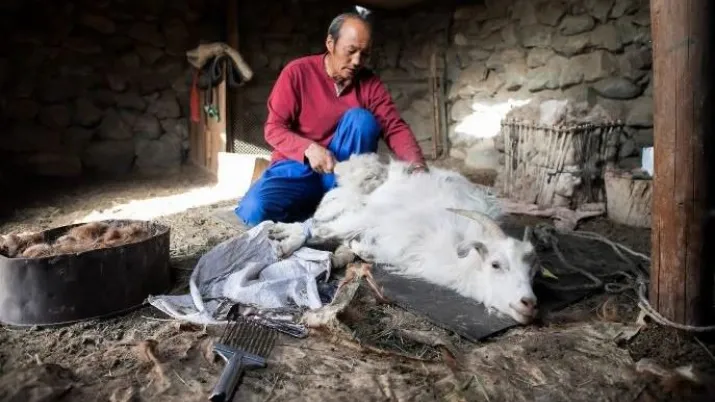
Linking the improvement in nomadic herding practices to sustainable cashmere production in the Gobi Desert
Fighting against pasture degradation in the Gobi Desert by proposing to develop a sustainable and environmentally-friendly sector for cashmere in which it is produced.
Project
Evaluation Summary : Linking improvements in nomadic herding practices to the production of sustainable cashme...
Against a backdrop of significant economic challenges facing the livestock sector (Mongolia’s second-largest economic sector); an imbalance in the pastoral system; and following market deregulation an...
Publication
Published on
Evaluation summary of the integrated production system for sustainable cashmere project (SPI-CD)
Cashmere, an exceptionally fine animal fiber, is produced mainly in China and Mongolia, with around 40% of the world's cashmere coming from nomadic herds in Mongolia. The aim of the SPI-CD project...
Publication
Published on
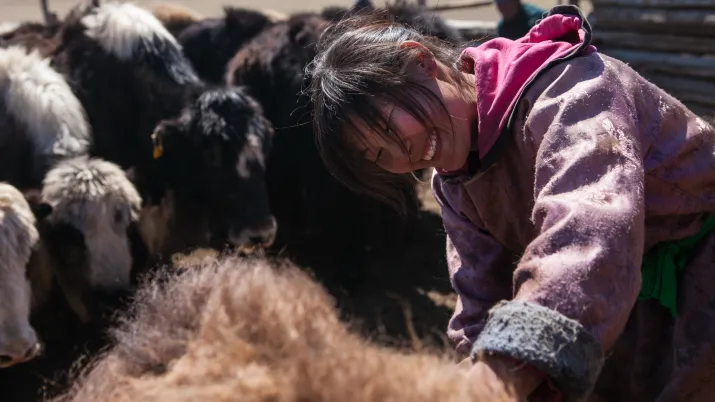
Stéphanie Bouziges-Eschmann interviewed by the GEF: “Delivering paths to a sustainable recovery”
Stéphanie Bouziges-Eschmann is Secretary General of the FFEM and serves as France’s Alternate Council Member at the Global Environment Facility. In an interview on the GEF website, she reflects on the...
News
Published on
