Publications and media
76 results for "evaluations et capitalisations"
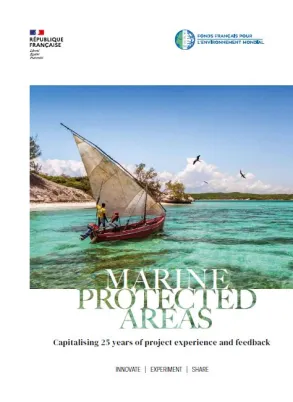
Capitalisation on Protected marine areas (MPA)
Since its creation in 1994, the FFEM has favoured innovative environmental projects that can be replicated at larger scale. To do so, it is essential to capitalise on experiences gained from these pro...
Published on
For an African Civil Sociey : cross-capitalisation of PPI and PPI OSCAN programmes
Over 330 projects have been financed since the launch of the Small-scale Initiatives Programme (PPI) in 2006 and the PPI OSCAN (North African civil society organisations) in 2014. The FFEM, IUCN Frenc...
Published on

Capitalization Report – 2016 Small-Scale Initiatives Program Forum
This report in french version capitalizes on exchanges between participants at the PPI 2016 FORUM organized from 18 to 20 October 2016, in Limbé, in Cameroon. The PPI 2016 Forum gathered over 70 pa...
Published on

Résumé d'évaluation - Porto-Novo, ville verte planificEvaluation summary - Porto-Novo, Green City: Strategic Planning and Sustainable Developments (PNVV)ation stratégique et aménagements durables (PNVV)
Porto-Novo, the capital of Benin, faces urban vulnerabilities linked to its lagoon context: bank degradation, recurrent flooding in coastal neighbourhoods, the isolation of certain areas, and weak pla...
Published on

Video : For an African civil society at the heart of environmental action: cross capitalization of the PPI
This film presents the results of a cross capitalization work between the actors of the PPI (Sub-Saharan Africa) and the PPI OSCAN (North Africa). It allows us to share the lessons learned over more t...
Published on

Video : IN FOCUS : Carbon Finance: A powerful tool for a sustainable future
The project evaluation and capitalization processes of the FFEM are essential to highlight technical knowledge, science, local knowledge and innovative practices for future action. The multidimensi...
Published on
Evaluation overview of WACA Project
The main objective of the project was the monitoring and management of coastal risks in West Africa and the promotion of “soft solutions” for preventing and protecting against these risks, through the...
Published on
Evaluation Summary of the WaSAf project
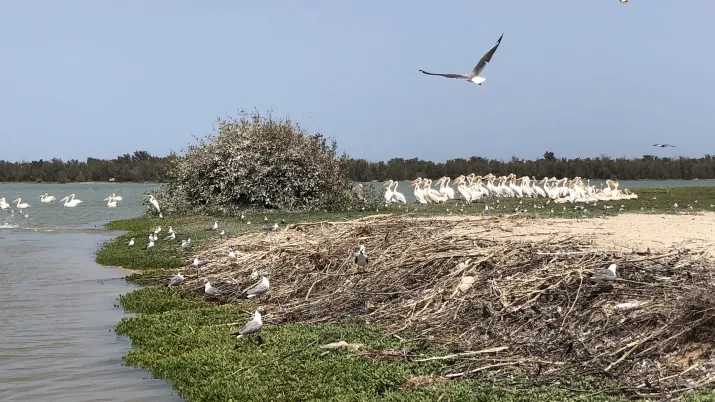
Faced with growing threats to water quality, the WaSAf project has implemented a water resource monitoring program across three sites in Africa. Its objective: to better understand the risks associate...
Published on

Evaluation summary - HotSpots 2
This project was implemented by the Wildlife Conservation Society (WCS) from September 2018 as a continuation of Hotspot 1 project. In December 2024, the French consulting firm Oréade-Brèche was awar...
Published on

Evaluation overview of the Project Equité II
The Equité II Program supports the transition of fair trade sectors in West Africa by strengthening the resilience of family farming in the face of climate change and soil degradation Through capacity...
Published on

Evaluation overview of the Project Restoration of Mangroves in Costa Rica and Benin
Faced with the challenges of coastal ecosystem degradation, the mangrove restoration project in Costa Rica and Benin has demonstrated the crucial role of these forests in mitigating climate change and...
Published on

FFEM Mangroves Initiative brochure
MANGROVE RESTORATION: CAPITALIZING ON BEST PRACTICES.
Published on
Evaluation overview of the Agroecology and Safe Food System Transitions (ASSET) Project
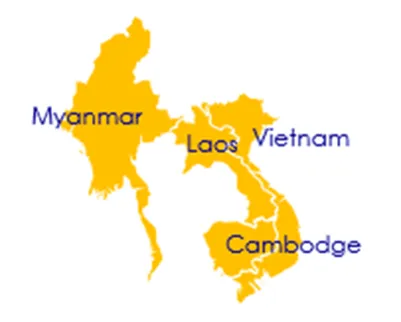
Agricultural systems in Southeast Asia face growing environmental and health challenges. Supported by the FFEM, the ASSET project promotes the transition to agroecology and sustainable food systems by...
Published on
Encouraging the private sector to participate in biodiversity conservation
La contribution active des Fonds fiduciaires pour la conservation (FFC) d’Amérique latine, des Caraïbes et d’Afrique aux objectifs de développement durable 2030 est une nécessité. Le projet BRIDGE, po...
Published on
Vidéo : What is a marine protected area (MPA)?
Since its creation in 1994, the FFEM has focused its action on innovative environmental projects and aims to replicate them on a larger scale. To do this, it is essential to capitalise on the expe...
Published on
Evaluation of AFD and FFEM contributions to biodiversity conservation trust funds (2005-2019)
Among the eight CTFs supported by AFD and FFEM since 2005 and which are the subject of this study, three are regional, the first covering three Central African countries (FTNS), a second focusing on M...
Published on
Capitalizing on FFEM’s Actions to Protect the World’s Marine Environment
20 Years of Commitment to Marine Conservation, Biodiversity Protection, and Sustainable Fisheries Since 1994, when it launched its first marine initiative in Saint Lucia in the Caribbean, the FFEM ha...
Published on

Burkina Faso: contributions of local NGOs in the conservation of natural resources
The capitalisation report was issued after the forum of local environmental protection NGOs held in Fada N'Gourma in September 2013, during which the issues of the governance of conservation areas, th...
Published on

The 6 recommendations to strengthen support for the agroecological transition
The agroecological transition in rural areas addresses major challenges such as food security, climate change, and the sustainable management of land and natural resources, thereby contributing to mor...
Published on
Etude d’opportunité du mécanisme REDD+ pour le secteur forestier privé - Projet FLEGT-REDD+ (FFEM)
La forêt tropicale africaine dense humide couvre une superficie de 225 millions d’hectares. Son rôle de stockage du carbone est à ce titre essentiel dans un contexte de changement climatique. Cette fo...
Published on

Executive Summary - Capitalization on 10 years of experience of the Small-Scale Initiatives Program
This 80-page report presents the 10 years of action of the Small-Scale Initiatives Program financed by FFEM and implemented by IUCN France and IUCN PACO. In 10 years, 144 civil society organization...
Published on
