Share the page
The Africa-France Partnership: Driving Innovation for Sustainable Transitions
Published on
For 30 years, the FFEM has been supporting initiatives in Africa and the Mediterranean that combine environmental conservation, innovation, and local development. Nearly 70% of its activities are carried out in these regions, with 296 projects supported on the African continent totaling nearly €387 million. On the occasion of the Africa Forward Summit, the FFEM is highlighting concrete solutions to accelerate energy, agricultural, educational, and maritime transitions in the face of climate and social challenges.
On May 11 and 12, 2026, Kenya and France will co-host the Africa Forward Summit, a major event bringing together heads of state, businesses, civil society actors, artists, and young people from Africa and the diaspora, united by a common goal: to support the continent’s sustainable development for the benefit of its people and to finance concrete solutions to major global challenges.
From energy transition and food sovereignty to climate education, ocean protection, and regional development, the Summit will highlight innovative initiatives that demonstrate the ability of Franco-African cooperation to develop solutions tailored to local realities.
The Africa Forward Summit Business Forum: Accelerating Innovative Energy Solutions
On May 11, 2026, as part of the Summit’s business forum and the “Inspire & Connect” day, the FFEM will highlight its commitment to working alongside startups and private-sector actors dedicated to accelerating the energy transition in Africa.
Among the initiatives supported are:
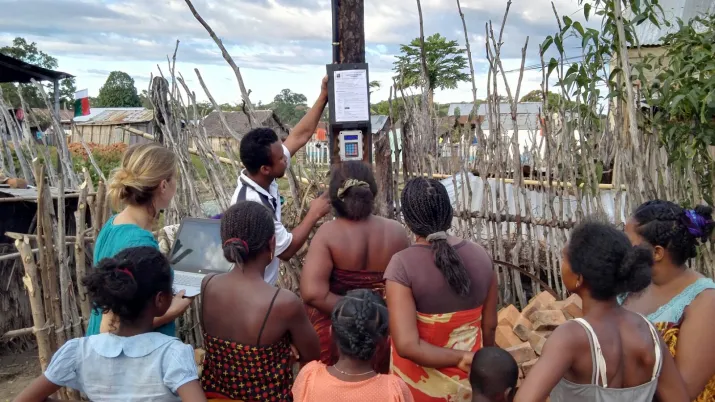
- Nanoé, which is developing an innovative model for microgrids in remote rural areas;
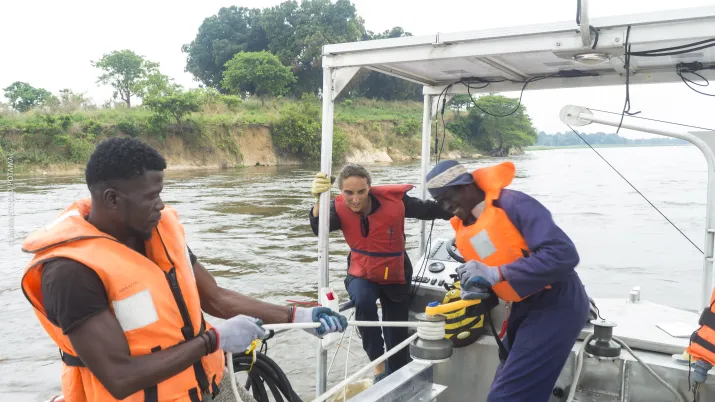
- Pot@Maï, whose two phases aim to provide renewable electricity through tidal and solar technologies to meet the basic needs of local communities.
Through these initiatives, the FFEM highlights the crucial role of innovation and partnerships in improving access to energy while supporting more sustainable and inclusive regional development.
Practical solutions for Africa's transitions
May 12 will be dedicated to global issues and development financing, with a particular focus on environmental transitions.
In West Africa, particularly in Senegal, several projects supported by the FFEM illustrate the diversity of solutions being implemented to simultaneously address climate, economic, and social challenges.
In the construction sector, initiatives such as COCLICO, TYCCAO, and PHARD promote the use of local materials and sustainable construction techniques to reduce the sector’s carbon footprint while providing solutions to meet the needs of local communities.
In the agricultural sector, the EQUITE and EQUITE CACAO projects support the adoption of more resilient and equitable farming practices.
At the intersection of agriculture, the environment, and health, initiatives such as Thiellal 2 and OLOH help reduce the use of chemical inputs, promote sustainable management of natural resources, and improve public health through the “One Health” approach. Together, these initiatives demonstrate an innovative and integrated Franco-African dynamic that places local solutions at the heart of sustainable transitions.
Climate education at the heart of FFEM’s work
Supported by the FFEM, the ARRICE initiative, led by the Office for Climate Education (OCE), is a landmark project aimed at sustainably integrating climate change education into the school systems of Kenya, Senegal, and Mauritius.
The program combines:
- Teacher training;
- The creation of accessible educational resources;
- The development of engaged educational communities working on concrete projects.
Through its comprehensive “whole school” approach, ARRICE transforms schools into true drivers of climate action by mobilizing students, teachers, and local stakeholders.
By highlighting the role of young people in environmental transitions and grounding solutions in local realities, this initiative helps foster regional centers of excellence capable of inspiring further initiatives across the African continent. The FFEM also supports several projects dedicated to the preservation of marine ecosystems and the development of a sustainable blue economy, balancing biodiversity protection, food security, and local economic development.
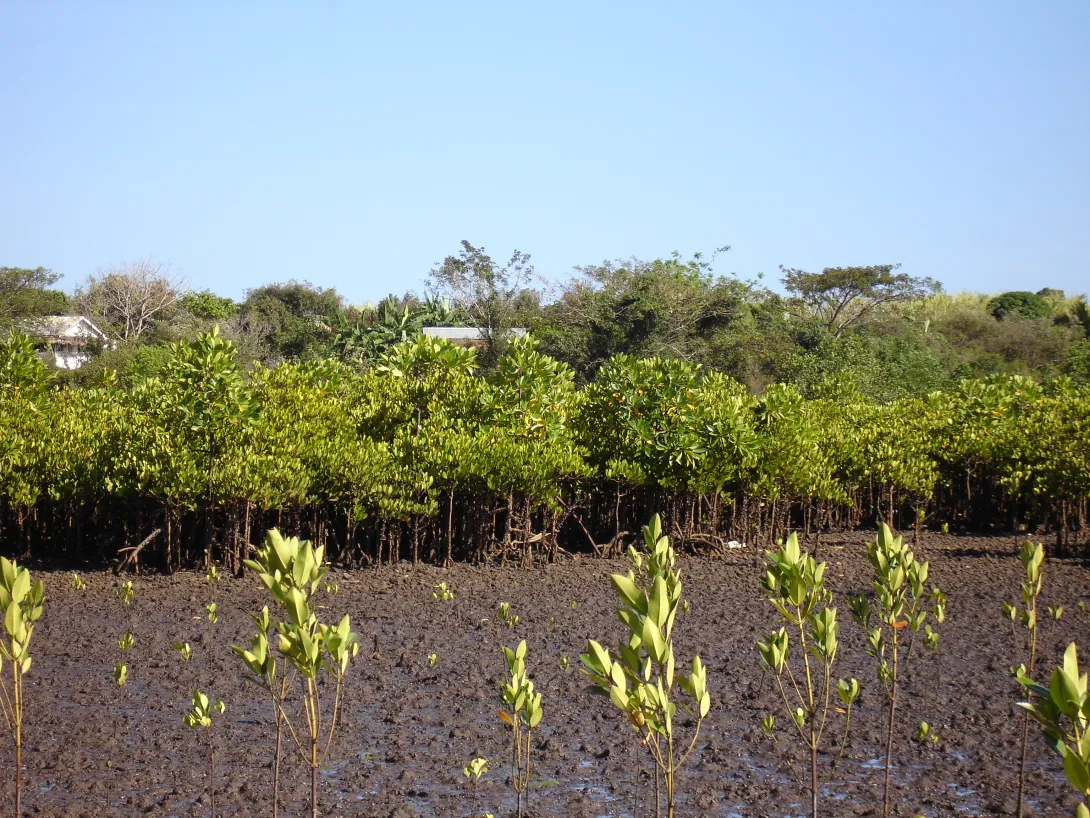
Preserving Mangroves in Madagascar
In the Boeny region of Madagascar, the PAPEC project is addressing the rapid degradation of mangroves caused by clear-cutting, coal mining, and unsustainable fishing.
The project aims to:
- Strengthen ecosystems and local management capacities;
- Develop alternative economic activities related to mangroves.
Strengthening the resilience of coastal areas
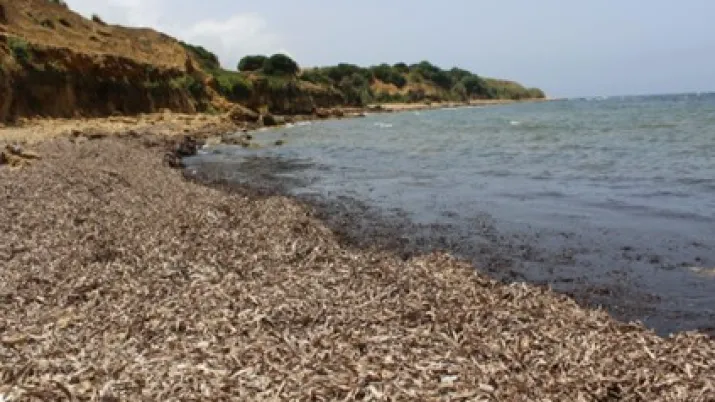
The WIOCOR and PENELOPE projects also demonstrate a commitment to marine ecosystems, from the western Indian Ocean to Tunisia. While WIOCOR supports sustainable and inclusive management of seagrass beds by closely involving local communities and public stakeholders, PENELOPE works to preserve Posidonia seagrass beds—true carbon sinks—while guiding fishermen toward more sustainable practices. These initiatives demonstrate the key role of nature-based solutions in strengthening the resilience of coastal areas in the face of climate change.
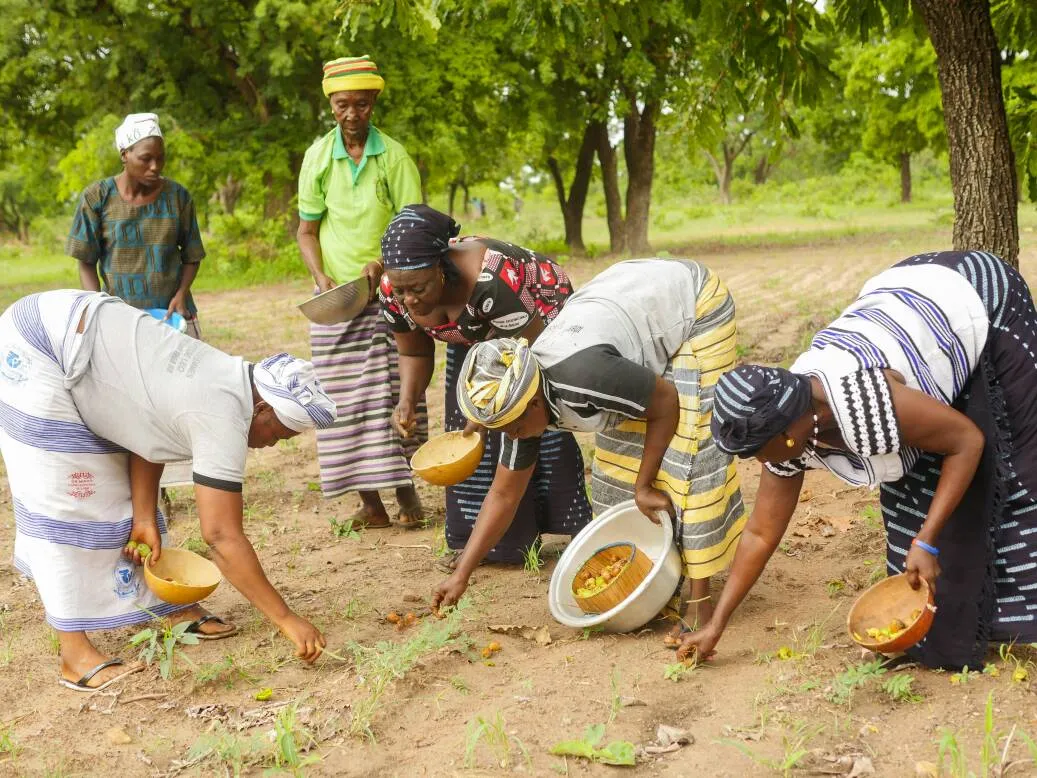
The RESILAO project, meanwhile, is part of the new post-2020 global framework for biodiversity. It is being implemented in the West African coastal zone and aims to:
- Support innovative local initiatives;
- Strengthen the resilience of ecosystems and communities;
- Support the development of regional projects;
- Promote the sharing of experiences and the capitalization of knowledge.
A collective effort to support sustainable transitions
Through these initiatives, the FFEM fully embodies the spirit of the Africa Forward Summit: an approach to development based on innovation, partnerships, and the sharing of experiences.
By bringing together stakeholders from the public, private, and civil society sectors, the SAF highlights the potential of cooperation between Africa and France to generate concrete solutions that are tailored to local realities and capable of sustainably accelerating environmental transitions across the African continent.
Projects related to the Africa Forward Summit
Projects related to the Africa Forward Summit
Promoting blue carbon for sustainable fishing and resilient coastlines in Tunisia (PENELOPE)
In progress
2026 - 2029
Innovative local initiatives for the resilience of ecosystems and populations
In progress
2022 - 2027