Share the page
When Forests Inspire the Future of Agriculture Through Agroforestry: A Winning Partnership Between Agriculture and Nature
Published on
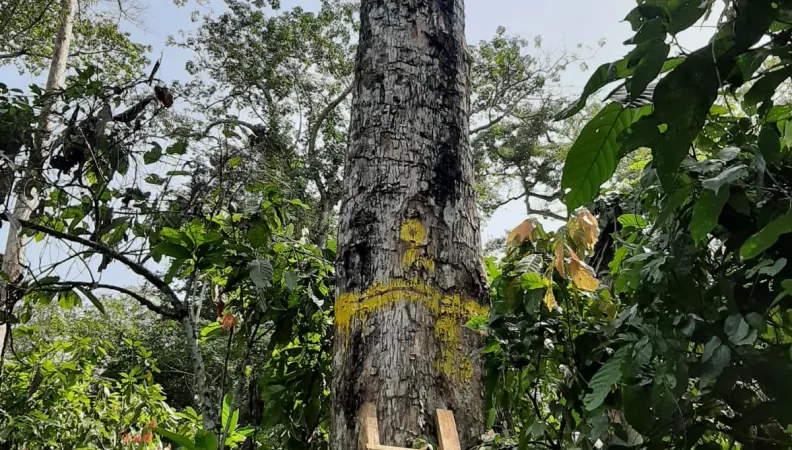
International Day of Forests 2026, like every year, celebrates the richness and diversity of forests, while highlighting their vital role in addressing climate challenges and the growing pressures of human activities.
The 2026 theme, “Forests and Economies,” highlights the essential role of forests as drivers of prosperity. Beyond the income generated by forest production and trade in renewable raw materials or foodstuffs, forests support family farming, enhance land productivity, and serve as a vital asset for future generations.
However, they currently face intense economic competition, particularly from the expansion of agriculture, industrial plantations, and extractive activities, driven by ever-increasing global demand. This mounting pressure particularly threatens tropical forests, which are nonetheless indispensable in the fight against climate change. In this context, it is essential to enhance the economic value of forests in a sustainable manner, in order to promote their preservation while generating benefits for local communities and the planet.
In this context, the FFEM has made forests a priority of its work. Through the RIFOP project (Strengthening and Innovation in Participatory Forestry), implemented in the Congo and Cameroon by the ABSL Nature+, it supports an innovative model that reconciles ecosystem conservation with improved living conditions for local communities.
Agriculture and Forests: A Vital Balance
The RIFOP project is based on an integrated, household-centered approach aimed at reconciling economic development with the conservation of natural resources. Specifically, it aims to:
- Develop sustainable agroforestry cocoa production with the goal of increasing cocoa productivity by at least 25%.
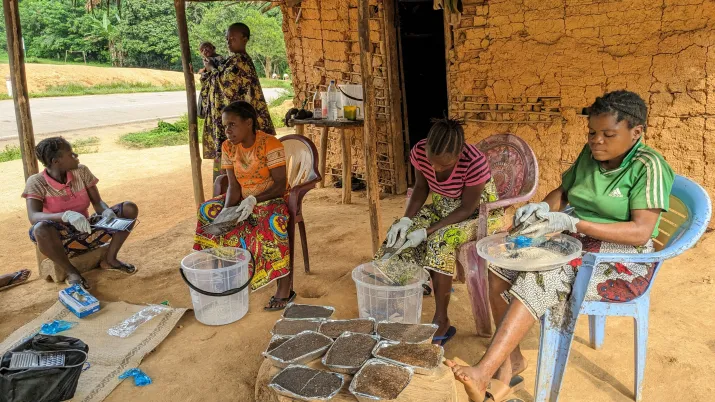
- Support women in the processing and marketing of roasted cocoa beans, thereby strengthening their economic autonomy.
- Halve land clearing in agroforests through an operational monitoring and detection system designed to curb this practice.
- Increase the number of trees on agricultural plots by 50% through reforestation efforts and regular monitoring.
NOTE:
Today, Africa produces nearly 70% of the world’s cocoa, and more than 80% of this production comes from small family farms ranging from 1 to 5 hectares. In this context, sustainably improving agricultural practices is a key lever in the fight against deforestation.
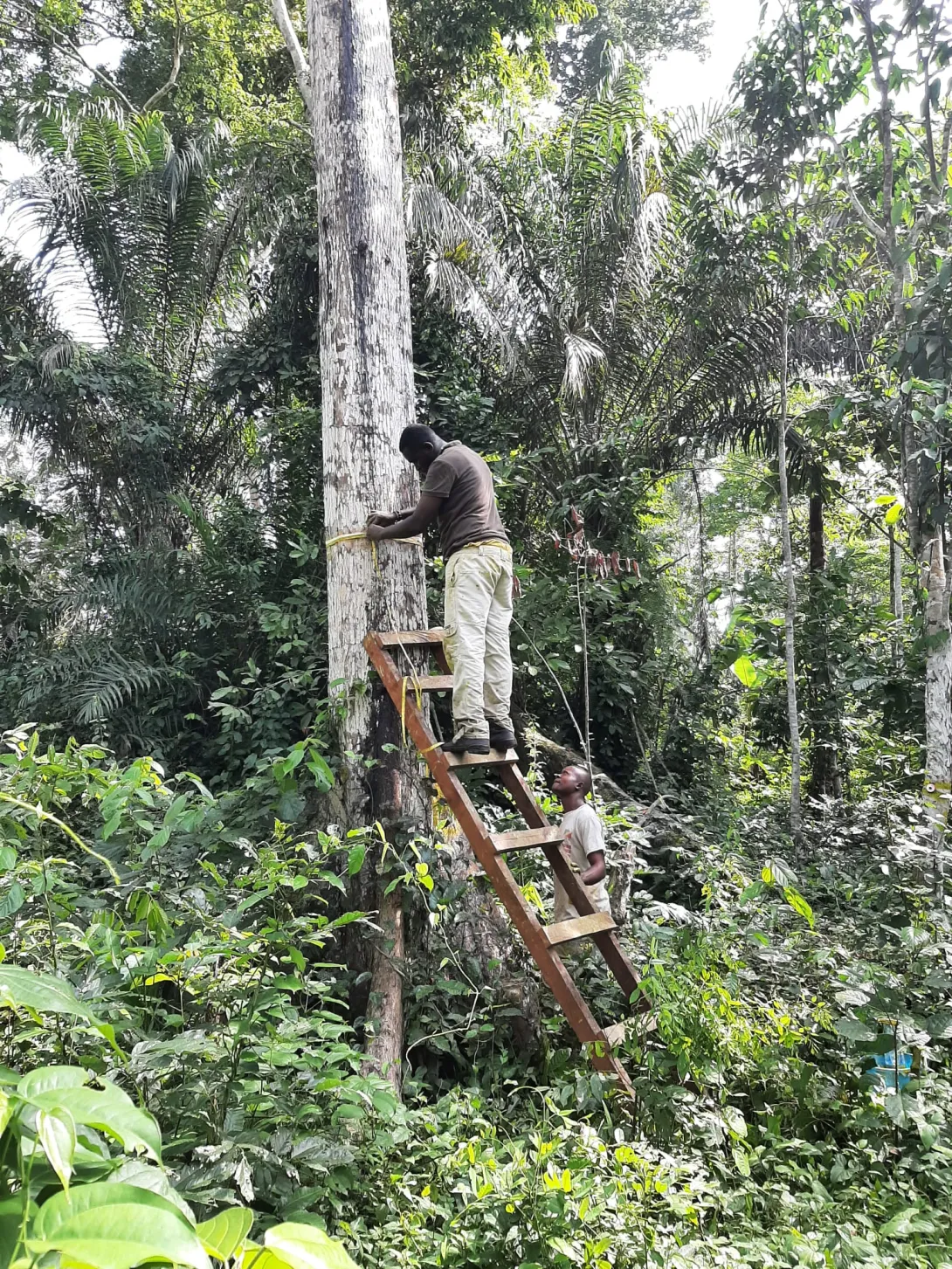
“Pure Odzala”: Sustainable Cocoa for the Sake of the Forests
The project is notably exemplified by the “Pure Odzala” cocoa strategy developed in partnership with Odzala-Kokoua National Park (PNOK) in the Republic of the Congo.
In response to growing global demand for sustainable and traceable cocoa, this project enables the establishment of a premium, traceable cocoa supply chain under the “Pure Odzala” brand—a rigorous and value-adding label. This label emphasizes quality, traceability, and environmental responsibility. Among other things, it guarantees sustainable chocolate production from cocoa farms managed by households living around Odzala-Kokoua National Park in the Republic of the Congo.
Agroforestry—which combines trees and crops—offers a concrete solution to environmental and economic challenges here. As a result, the supply chain generates higher incomes for producers, thereby reducing economic risks while strengthening the protection of the National Park and limiting deforestation caused by cocoa production and the illegal and unsustainable exploitation of natural resources.
Supporting Odzala cocoa means improving livelihoods, contributing to climate change mitigation, and preventing further deforestation. This is crucial in the vicinity of a national park with high conservation value.
By 2025, 42 cocoa farmers who owned their own fields across six villages north of the PNOK were participating in this initiative, demonstrating the model’s potential at the local level.
A win-win approach for people and the climate
By supporting the development of agroforestry cocoa, the FFEM helps improve communities’ livelihoods while contributing to climate change mitigation. By strengthening households’ role in sustainable land management, the project promotes local ownership of forest conservation issues.
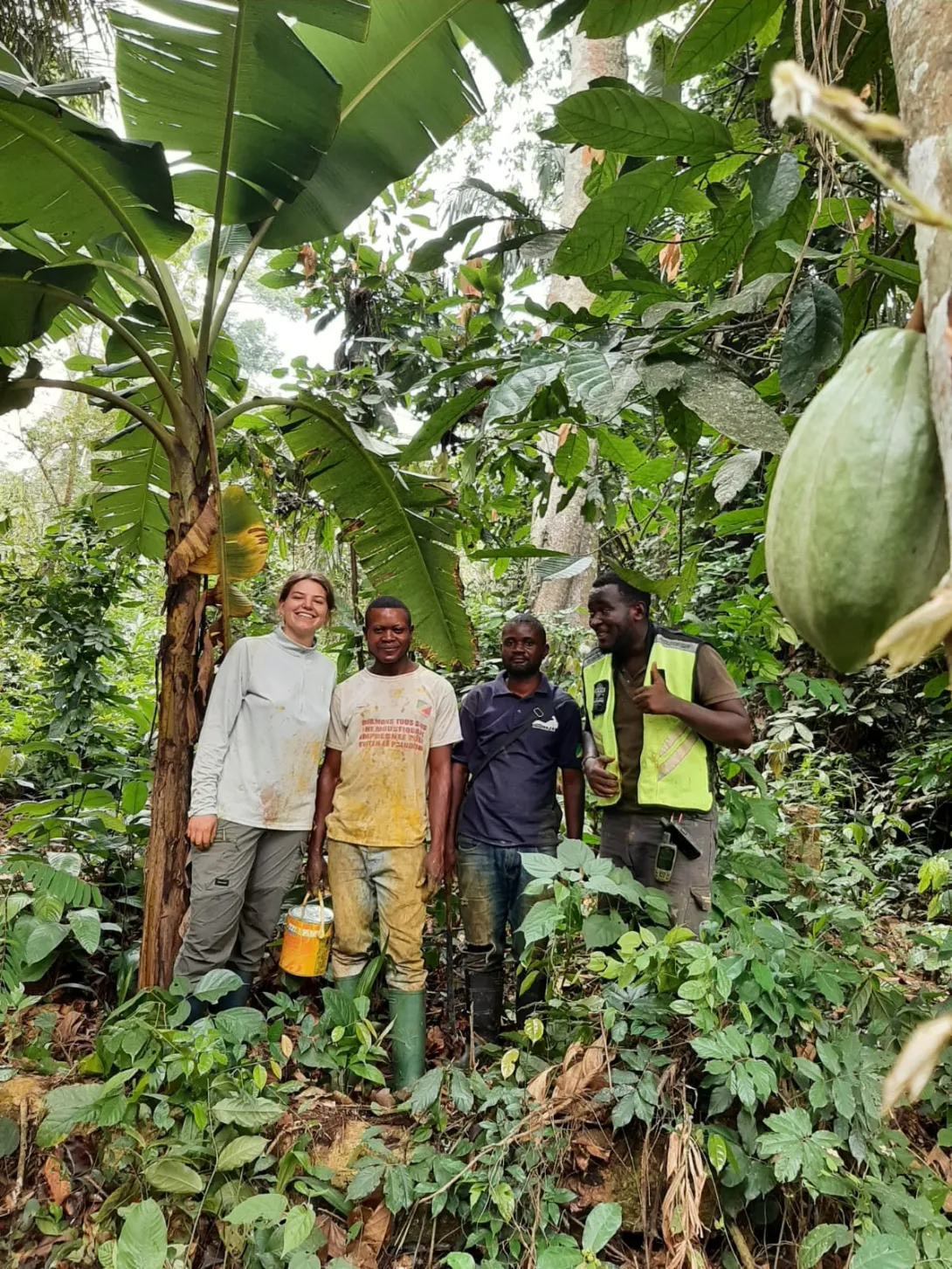
Toward a More Resilient Agriculture
Agroforestry is emerging today as a solution for the future. Sustainable, productive, and ecosystem-friendly, it allows for the reconciliation of agricultural production and environmental protection. By fully integrating trees into agricultural systems, it enhances biodiversity, improves soil health, contributes to carbon sequestration, and diversifies producers’ sources of income.
This model demonstrates that it is possible to combine economic development with the preservation of natural resources. It paves the way for more resilient agricultural systems capable of responding to climate challenges while ensuring sustainable incomes for producers.
Learn more about the RIFOP project
Participative forestry for local communities
The social forestry which has developed over the last two decades, in particular with the roll-out of community forests, has failed to deliver the expected social, economic and environmental planning...
- When ?
-
2022 - 2027
Status
In progress
- Theme
- Agriculture et forêts durables, Biodiversité, Changement climatique
- Location
- Cameroon
- Co-financiers
- Agence Française de Développement (AFD), NATURE +, European Union (EU), Gembloux Agro-Bio Tech, PPECF2
Our other projects on this topic
Towards participatory and sustainable forest management in the Maya Biosphere Reserve
In progress
2025 - 2028
Protecting the Amazon forests and strengthening communities in Colombia and Peru
In progress
2025 - 2028