Share the page

Protect and restore marine biodiversity, while supporting food security for coastal communities in the Philippines (SEA ACADEMY)
Project
Published on

-
Project start date
-
Status
In progress
-
Estimated date of project termination
-
-
Project financing date
-
-
Financing duration
-
3,5 years
-
Type of program
-
FFEM
-
Global financing amount
-
€ 2 585 000
-
FFEM financing amount
-
€ 1 292 500
-
Project lead member institution(s)
-
French Ministry of the Ecological Transition
-
Country and region
-
Philippines
-
Type of financing
-
Partners
-
Agence Française de Développement (AFD), The French Coastal Protection Agency
-
Beneficiaries
-
Sulubaaï Environmental Foundation INC
-
Type of beneficiary
-
NGO, Foundation

Faced with the alarming decline of marine biodiversity and the scarcity of fishery resources, the project led by the French Ministry for Ecological Transition and implemented by the Sulubaaï Environmental Foundation in the Philippines, proposes an integrated response. Based on the creation of a network of community marine protected areas, the restoration of degraded ecosystems and the development of sustainable economic activities, this project aims to sustainably protect marine ecosystems and secure the livelihoods of local populations. This initiative contributes to the international 30x30 target, which aims to place 30 per cent of land and marine areas under protection by 2030.
Context
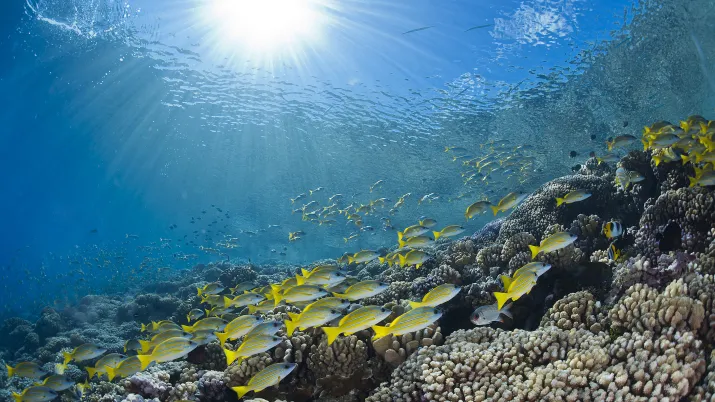
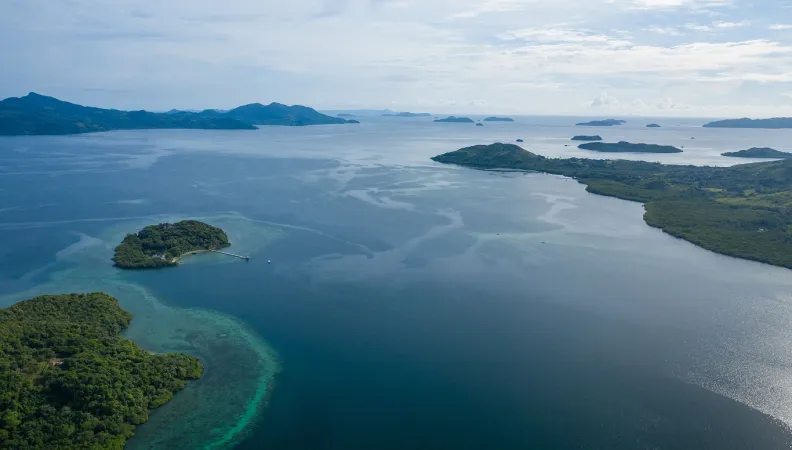
Located in Taytay, northeast of Palawan Island, in the heart of the Coral Triangle—the most biodiverse reef area in the world—, this territory faces increasing environmental threats: deforestation through slash and burn cultivation, illegal fishing (to cyanide, to explosive, to compressor), and overexploitation of marine resources. Result: a dramatic drop in reef biodiversity and growing food insecurity for fishing communities, aggravated by the export of fish resources from villages.
Description
The project is structured around three major components, complementary and interdependent:
Governance and management of marine ecosystems:
- Creation and extension of a network of connected marine protected areas (MPAs) with high levels of protection, managed locally and in a participatory manner.
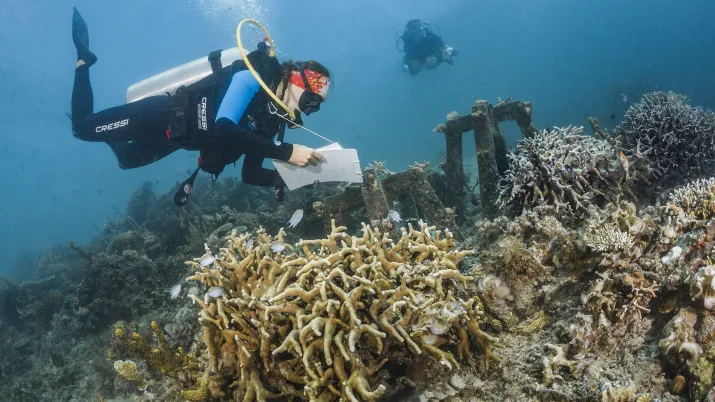
- Implementation of ecological restoration actions (e.g.: artificial reefs, reseeding).
- Development of a national model for MPA management, replicable throughout the Philippines.
Socio-economic resilience of local communities:
- Support for fishermen (structuring, skill building).
- Development of sustainable community-based aquaculture (notably through the rearing of post-larvae in the existing fishlab).
- Implementation of new income-generating activities (AAGR), integrating social justice, poverty reduction and food resilience.
Research, education and knowledge dissemination:
- Scientific monitoring and evaluation of MPA management.
- Valorization of the results through communication, education and awareness actions (especially among youth and local institutions).
- Local capacity building and knowledge transfer for model replication.
Results and expected outcomes
- A network of operational, ecologically connected and locally governed community MPAs serving as a pilot model for the entire island of Palawan and the country.
- A significant reduction in fishing pressure, accompanied by an improvement in the food security of communities.
- Sustainable alternative economic activities promoting income diversification and poverty reduction.
-
Local ownership of management tools, making communities autonomous in the preservation of their natural heritage, without external dependence.
The project is expected to directly benefit around 1,800 people, including 300 fishermen, 1,200 pupils and 80 researchers, and to help create local economic opportunities for 70 people. It will also reach nearly 8,000 indirect beneficiaries.
Innovative and exemplary features
Since 2012, Sulubaaï has demonstrated the effectiveness of its innovative approach combining science, local co-construction and field action. His work has been praised nationally and internationally for its exemplary character, both in terms of biodiversity conservation, community mobilization and applied research.
This project capitalizes on these achievements to build an integrated, robust, sustainable and reproducible model, combining:
- Proven ecological restoration tools
- Inclusive and innovative local governance.
- A strong link between scientific research and operational management.
It fully illustrates the ambitions of the FFEM in terms of preserving biodiversity, adapting territories to climate challenges, and promoting sustainable development models at the service of populations.
This project is a continuation of a first intervention by FFEM in favor of the Sulubaaï Environmental Foundation. It aims to consolidate the achievements and move to a larger scale the approaches, tools and methodologies tested in this first project. The design of this new phase builds on the findings and recommendations of the final independent evaluation conducted on the previous phase.
Sulubaaï Environmental Foundation
Since 2012, Sulubaaï has worked to preserve and restore ecosystems (particularly marine ones) by supporting the creation of community-based marine protected areas (MPAs), and by offering innovative techniques for coral restoration, fish restocking and mangrove restoration. Sulubaaï’s identity is rooted in the integration of local communities, an interdisciplinary science-based approach to management, and the transfer of knowledge and skills as part of an effort to empower local communities. Its marine conservation efforts were recently recognized by the Marine Conservation Institute, which awarded Gold-level Blue Park status to the network of MPAs created with Sulubaaï’s support. The foundation carries out scientific studies in marine ecology, fisheries and social sciences to inform management of the bay. Through its work, Sulubaaï helps preserve biodiversity and strengthen the food security of coastal populations.
Sustainable Development Goals
ODD11 Sustainable cities and communities
ODD13 Climate action
ODD14 Life below water
Interview with Stéphanie Bouziges-Eschmann by Frédéric Tardieu of the Sulubaaï Environmental Foundation
Interview Stéphanie Bouziges-Eschmann - UNOC 3
As part of the 3rd United Nations Ocean Conference (UNOC3), Stéphanie Bouziges-Eschmann, Secretary General of FFEM is interviewed by Frédéric Tardieu, President of Sulubaaï Environmental Foundation on...
Published on June 9, 2025

Learn more about phase 1 of the project
Restore coral reef biodiversity in the Shark fin Bay
Situated in the Philippines, Palawan is regarded as the most important among the top ten coral reef biodiversity hotspots in the world, being both the richest and the most threatened site on the plane...
- When ?
-
2020 - 2024
Status
Completed
- Theme
- Biodiversity, Aquatic ecosystems
- Location
- Philippines
- Co-financiers
- Fondation Prince Albert II de Monaco, Blancpain Ocean Commitment, Sulubaaï Environmental Foundation
To restore marine biodiversity and support coastal communities
A blue innovation boosting the resilience of coastal communities and marine ecosystems
In progress
2022 - 2026
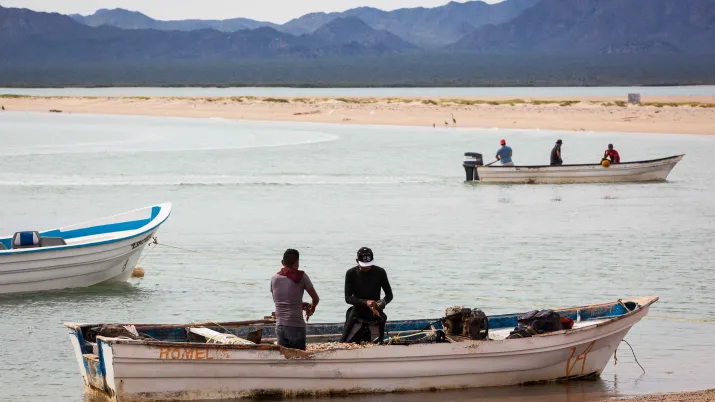
Restoration of coastal ecosystems to enhance the resilience of coastal communities
In progress
2021 - 2026
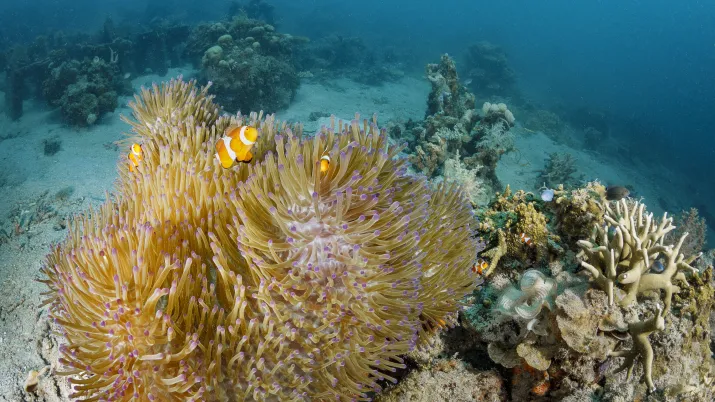
Our News
COP31: bringing together on-the-ground solutions and international climate commitments
Published on November 11, 2026
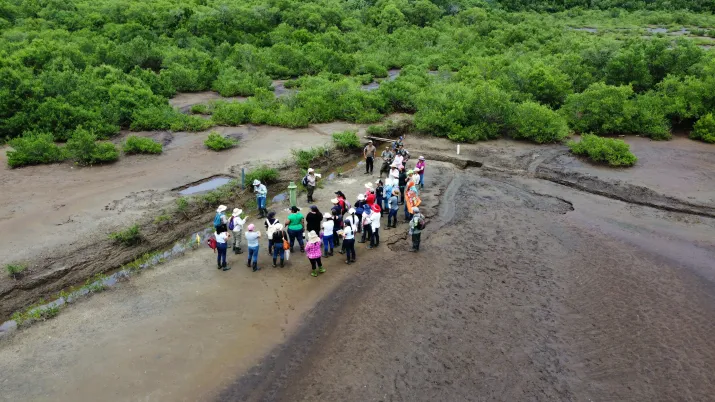
17 years of partnership with the Conservatoire du littoral: from French expertise to shared solutions
Published on September 25, 2026
Entry into force of the BBNJ Treaty: A decisive step for biodiversity in the high seas, long supported by the ...
Published on January 19, 2026