Share the page
Entry into force of the BBNJ Treaty: A decisive step for biodiversity in the high seas, long supported by the FFEM
Published on
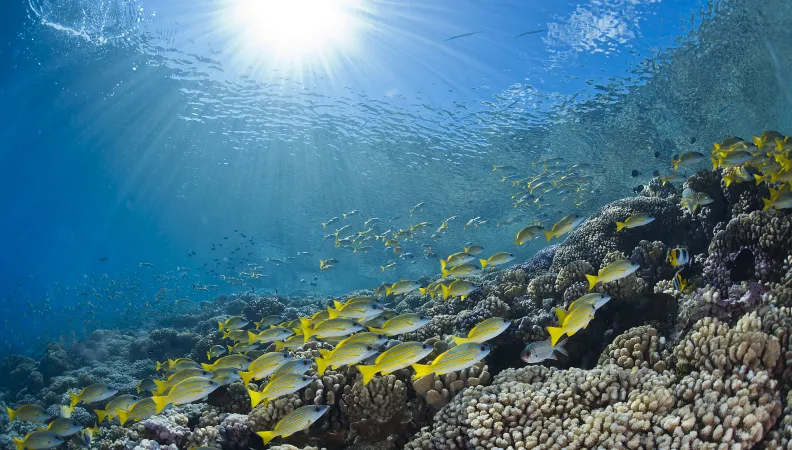
The Biodiversity Beyond National Jurisdiction (BBNJ) Treaty, a new international agreement, entered into force on January 17, 2026, after reaching the threshold of 60 ratifications required on September 19, 2025.This historic international agreement marks a decisive step for the conservation and sustainable use of biodiversity in the high seas.
A key agreement for ocean governance
Linked to the United Nations Convention on the Law of the Sea (UNCLOS), this treaty applies to marine areas beyond national jurisdiction, which represent nearly 60% of the ocean's surface and about two-thirds of the world's marine areas. Long lacking a comprehensive legal framework, these areas are now facing increased human use and the growing impacts of climate change, threatening marine ecosystems and fishery resources.
As the third implementing agreement of the United Nations Convention on the Law of the Sea (UNCLOS), the treaty establishes an innovative legal framework designed to strengthen cooperation and improve governance of the high seas. In particular, it provides for planning mechanisms, environmental assessments, a dedicated institutional framework, and appropriate financing mechanisms.
Objectives and contributions of the BBNJ Treaty
This historic treaty on marine biodiversity beyond national jurisdiction aims to:
- Establish common standards for the conservation and sustainable use of marine biodiversity in the high seas;
- Enable the creation of area-based management tools (including marine protected areas in the high seas);
- Strengthen environmental impact assessments for activities on the high seas, responding to the growing need to prevent and reduce impacts on marine ecosystems by analyzing in advance the potential effects of activities carried out on the high seas (resource exploitation, industrial projects, research, etc.).
- Promote the fair and equitable sharing of marine genetic resources (including sequencing data);
- Support capacity building and marine technology transfer, particularly for developing countries.
The agreement thus complements and strengthens existing instruments by establishing a coherent and operational framework for more effective management of marine areas beyond national jurisdiction.

Governance and implementation prospects
The implementation of the treaty will continue with the third preparatory meeting (PREPCOM3) in April 2026 to finalize draft decisions on institutional aspects and submit them to the first BBNJ COP to be held in New York in early 2027. The Conference of the Parties will be the decision-making body responsible for monitoring, evaluation, and implementation of the provisions of the agreement. It will be assisted by advisory bodies, including a scientific and technical body, and will meet annually over the next five years. Proposals from one or more states on the subject will be evaluated by the Secretariat responsible for the Law of the Sea Treaty and its Scientific and Technical Body, then validated by the Conference of the Parties.
With more than 200 Marine Protected Areas (MPA) supported for over three decades, since 2014 the FFEM has been supporting high seas biodiversity conservation, with the dual aim of acquiring the scientific knowledge needed to guide decision-making in favor of preserving high seas ecosystems and contributing to preparations for the establishment of the first MPAs in the high seas under the BBNJ agreement currently being ratified.

The FFEM: a pioneering commitment to the high seas
As part of its long-term commitment, the FFEM has positioned itself as a key player and has been playing a pioneering role for over a decade in promoting biodiversity in the high seas and supporting the emergence of the BBNJ treaty.
Faced with the amplifying effects of climate change, particularly for the most vulnerable territories, preserving the oceans and supporting the implementation of the BBNJ treaty are strategic priorities for its action.
The numerous initiatives supported by the FFEM, as well as the exchange day organized on June 3, 2025, ahead of the 3rd United Nations Ocean Conference (UNOC), demonstrate the FFEM's commitment to a resilient, inclusive, and ecosystem-friendly blue economy based on lessons learned in the field and integrated approaches.
Knowledge sharing is at the heart of the FFEM's mandate. In 2021, the FFEM published a report summarizing feedback from 25 years of supported projects. This work on Marine Protected Areas (MPAs) and the protection of marine biodiversity focused on knowledge issues for management and economic development in MPAs.
Discover FFEM's capitalization on marine protected areas
News related to the BBNJ Treaty
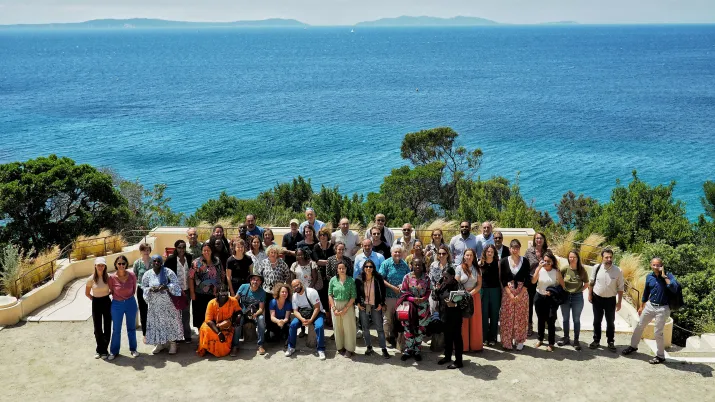

The FFEM at the Heart of Ocean Protection Efforts during the 3rd United Nations Ocean Conference
Published on June 12, 2025