Share the page

Strengthening civil society in North Africa for climate and biodiversity (PPI OSCAN 4)
Project
Published on

-
Project start date
-
Status
In progress
-
Estimated date of project termination
-
-
Project financing date
-
-
Financing duration
-
4,5 years
-
Type of program
-
PPI
-
Global financing amount
-
€ 4177000
-
FFEM financing amount
-
€ 2000000
-
Project lead member institution(s)
-
French Ministry of the Ecological Transition, Ministry for Europe and Foreign Affairs
-
Country and region
-
Egypt, Libya, Morocco, Tunisia
-
Type of financing
-
Partners
-
Beneficiaries
-
UICN-Med
-
Type of beneficiary
-
NGO, Foundation



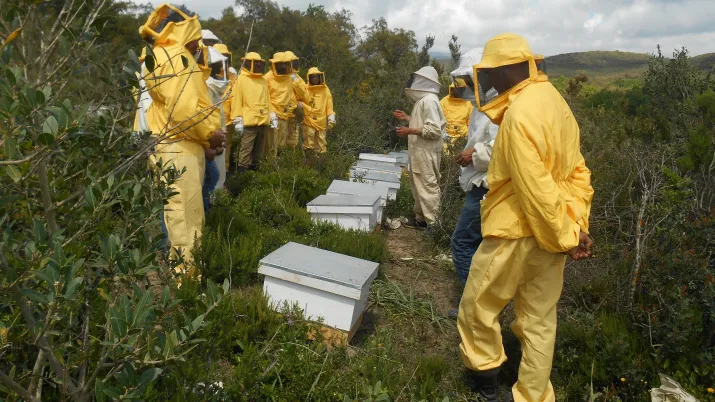
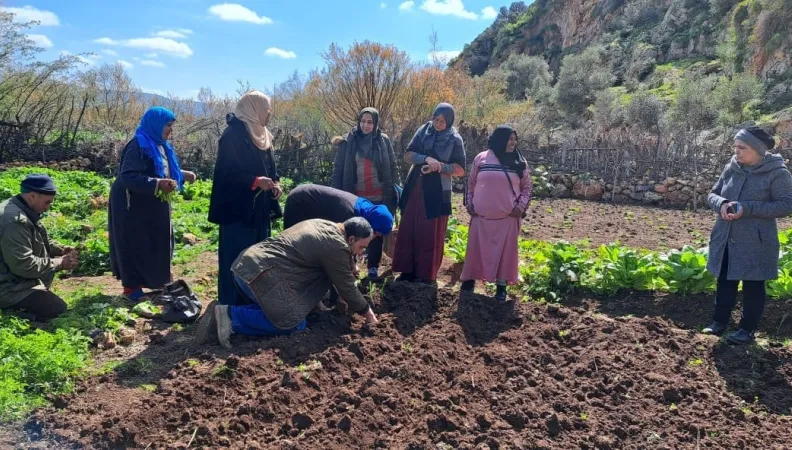
At the heart of environmental issues in North Africa, this fourth phase of the Small Grants Programme for North African Civil Society Organisations (PPI OSCAN) aims to strengthen the influence and contribution of North African civil society in biodiversity conservation and the fight against climate change in Morocco, Tunisia, Libya and Egypt.
Context
The Mediterranean region is one of the world's main biodiversity hotspots, characterised by an exceptional wealth of endemic species but subject to significant anthropogenic pressures, exacerbated by marked climatic impacts. In North Africa, these environmental challenges are compounded by changing political contexts and persistent socio-economic fragility. For several years, however, the emergence of a dynamic network of associations has revealed the growing role of civil society organisations (CSOs) in conservation and sustainable development, despite often limited technical, financial and organisational capacities and very difficult access to international financing mechanisms.
To address these issues, in 2014 the FFEM and its partners launched the OSCAN PPI, implemented by the International Union for Conservation of Nature (IUCN Med) Centre for Mediterranean Cooperation. The first three phases of the OSCAN PPI have so far funded more than 100 projects led by local organisations working with communities, strengthened the skills and governance of CSOs and improved recognition of their legitimacy among national authorities. The fourth phase of the programme is intended to be the central pillar of the IUCN's new Mubadarat strategy for Mediterranean civil society.
Description
The fourth phase of the PPI OSCAN programme is structured around four components:
- Funding approximately 40 conservation projects led by small local CSOs in Libya, Morocco, Tunisia and Egypt.
- Strengthening the capacities of CSOs (technical, organisational and financial) and supporting their technical and financial autonomy and the diversification of their funding sources.
- Promoting exchanges and networking between CSOs, as well as highlighting the impacts and results achieved.
- Ensuring the coordination and management of the programme by IUCN Med within the Mubadarat strategy.
Results and expected outcomes
The OSCAN 4 PPI aims to sustainably increase the influence of CSOs in biodiversity conservation and the fight against climate change in Morocco, Tunisia, Libya and Egypt.
- Select, contract and monitor projects efficiently.
- Achieve the expected results of biodiversity conservation projects in the four countries.
- Strengthen CSOs in grant management and professionalisation.
- Strengthen exchanges between CSOs, support their advocacy and promote their dialogue with public authorities.
- Capitalise on, disseminate and communicate the programme's results.
Innovative and exemplary features
PPI OSCAN's philosophy is to promote local development and biodiversity conservation with the central participation of civil society, by supporting projects built according to the needs and priorities identified by and for local communities.
The programme innovates by supporting emerging CSOs that are often excluded from traditional national or international funding, through individualised support that promotes their structuring, professionalisation and institutional recognition. It acts as a springboard by offering initial international financial support and increased visibility. Its flexibility allows it to adapt to the unstable contexts of the region and the specific needs of each organisation, and to support experimentation. Finally, regional networking stimulates peer-to-peer exchange, the dissemination and local adaptation of good practices, reinforcing the catalytic role of the programme.
Sustainable Development Goals
ODD13 Climate action
ODD14 Life below water
ODD15 Life on land
ODD16 Peace, justice and strong institutions
ODD17 Partnerships for the goals
Learn more about our projects
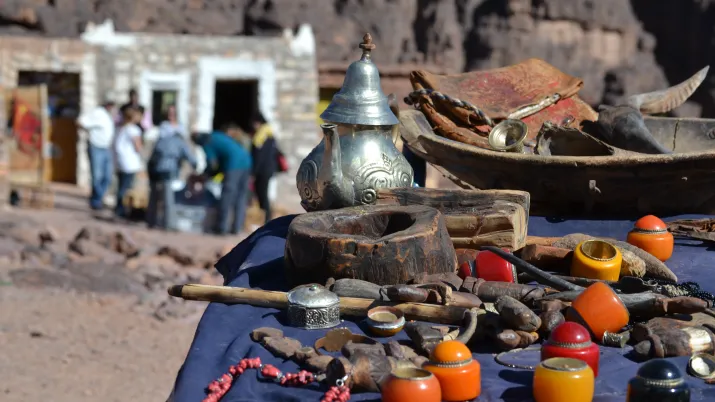
Small-Scale Initiatives Program for Civil Society Organizations in North Africa
Completed
2018 - 2021
Related news
Uniting knowledge, people and actions: the vision promoted by FFEM at the 2025 IUCN Congress
Published on October 8, 2025
Intersecting capitalisation of the Small-scale Initiatives Programmes (Programme Petites Initiatives - PPIs) A...
Published on August 27, 2021