Share the page
When solutions flow: South-South cooperation in action
Published on
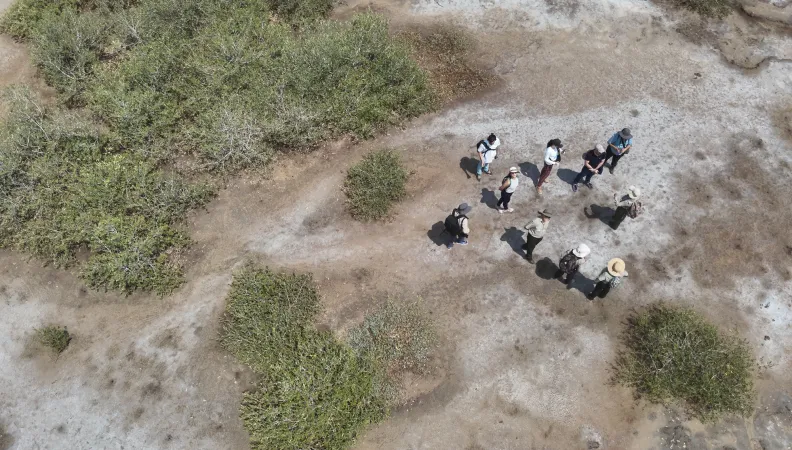
On the occasion of the United Nations Day for South-South Cooperation, the FFEM highlights several initiatives that promote the exchange of know-how between countries and territories of the South. Mangrove restoration, support for African civil societies, networking of conservation funds between Africa, Latin America and the Caribbean: different contexts, but the same issue is at stake, that of sharing solutions experienced on the ground and adapting them to other territories.
Circulating experiences and know-how
In the face of climate change and biodiversity loss, many responses are already being tested on the ground. Some can be useful well beyond the territory where they were born, provided that their lessons are shared and adapted to new contexts.
This is one of the principles of South-South cooperation: enabling countries facing common challenges to share their experiences, knowledge and know-how.
Some key figures:
- The Suds include 134 countries and are home to 80% of the world’s population.
-
In 2023, developing economies account for 65% of global foreign direct investment (FDI) flows and generate about 32% of outward FDI.
(Source: United Nations)
In 2026, this dynamic is at the heart of the United Nations Day for South-South Cooperation, marked notably by the launch of the Global Alliance for South-South and Triangular Cooperation. Facilitated by the United Nations, this platform should make it possible to better connect countries' priorities with solutions, expertise and partners likely to respond.
This approach is in line with that of the FFEM, which has been supporting pilot projects and innovative solutions for more than 30 years, paying particular attention to capitalizing on results, sharing experiences and their potential for replication.
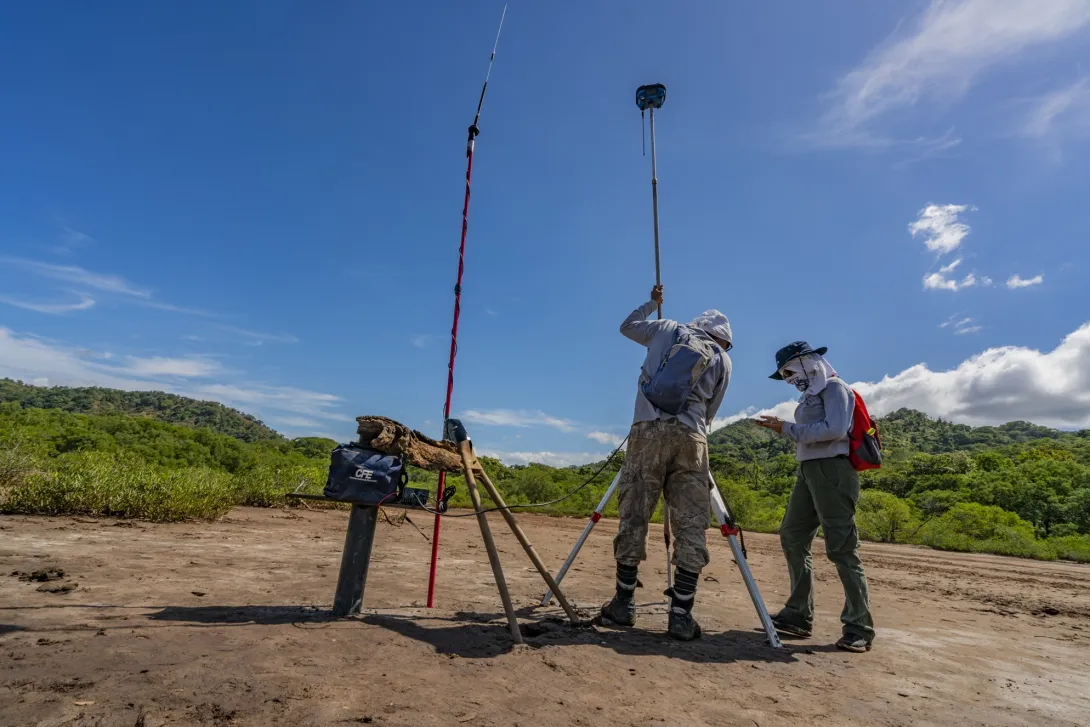
How to restore degraded mangroves?
On this subject, the experiments carried out for several years in Mexico have fueled work undertaken several thousand kilometers away.
With the support of the FFEM, the Mangroves Initiative relies on technologies and skills developed in Mexico to restore pilot sites in Costa Rica and Benin. Methods of hydro-ecological diagnosis and restoration experimented in Costa Rica have been mobilized in particular in the Mono delta, in Benin.
Researchers and stakeholders from the three countries exchange their methods and results in order to identify the most relevant approaches and document the conditions under which they could be replicated elsewhere. From one territory to another, the methods are therefore not applied identically: they are adapted to ecological characteristics and local realities.
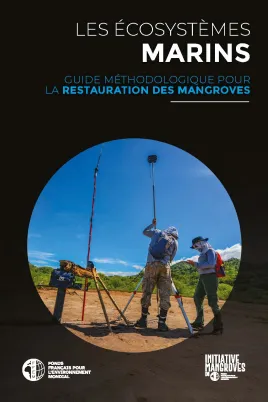
To facilitate the sharing and appropriation of these know-how, the Mangroves Initiative has also just published a guide dedicated to the restoration of mangroves as well as a tutorial, the latter produced in partnership with IUCN. These resources capitalize on the lessons learned from the project and offer practical tools to support their dissemination and adaptation to other contexts.
Discover the Mangroves Initiative
Tutorial on mangrove restoration
Download the latest mangrove restoration guide
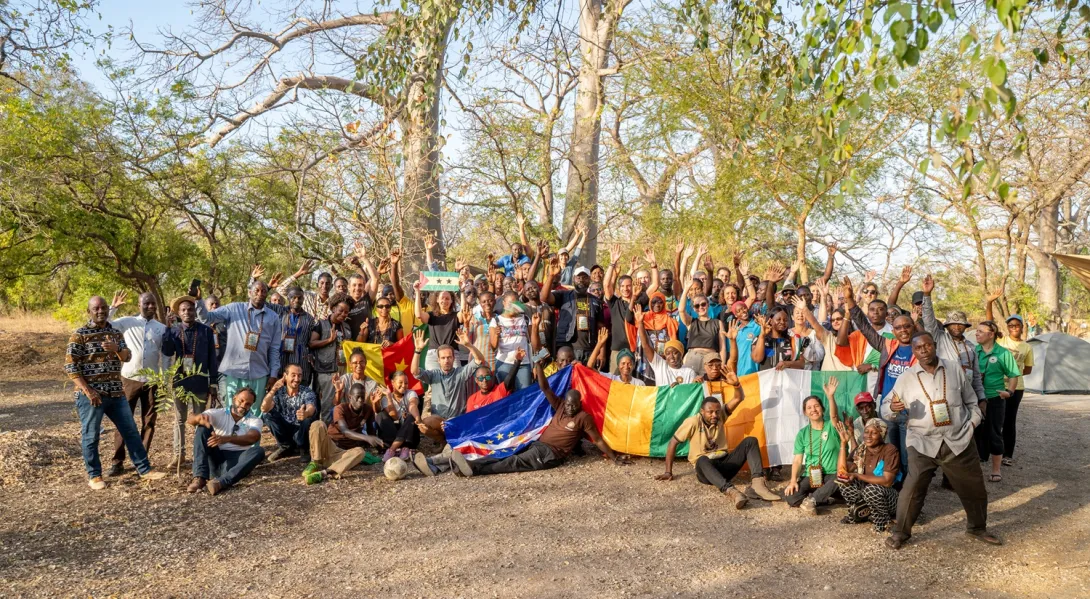
In 2026, the Small Initiatives Program (PPI) celebrates its 20th anniversary. Created by the FFEM in 2006, it supports African civil society organizations committed to biodiversity conservation and sustainable management of natural resources.
During its various phases, the programme supported 327 projects in 33 countries and 214 civil organizations. Its seventh phase, launched in 2025, is expected to support more than 80 new projects.
The PPI has also gradually established itself as a space for exchanges between organizations. Meetings, sharing of experiences, networking and partnerships allow stakeholders to compare their practices and benefit from the experience gained in other countries.
PPI 7 continues in this direction, notably through mentorship programs between civil society organizations: an experienced organization can thus support a more recent structure and transmit to it the skills acquired during its projects.
After twenty years of existence, this collective dimension is one of the program’s achievements: beyond the individually supported projects, a network of African actors has been structured and continues to share its experiences.
Découvrez la 7ème phase du PPI
How can we encourage the exchange of experiences between actors facing the same challenge on several continents: mobilising more private funding for biodiversity?
This is one of the objectives of the BRIDGE project, supported by the FFEM and implemented with the RedLAC networks in Latin America and the Caribbean, and CAFÉ in Africa. Completed on 30 June 2026 after five years of implementation, the project has enabled Conservation Trust Funds (CTFs) to test and deploy innovative financial mechanisms, while strengthening their capacities and exchanges with the private sector.
In 2025, eight funds continued to implement innovative financial mechanisms with the private sector. Among the most advanced initiatives, the MAR Fund has developed a mechanism to promote access for small-scale fishermen in the Mesoamerican reef to insurance and financing solutions, by associating 23 organizations of fishermen in Honduras.
BRIDGE also fostered a true South-South learning dynamic. Ten mentoring experiments involving 24 FCFs were completed in 2025. In parallel, eight working groups dedicated to conservation financing, monitoring and evaluation or fundraising mobilized 226 participants from 40 FTFs.
These exchanges allowed the funds to compare their practices, to transmit their know-how and to bring out approaches adapted to different contexts. At the end of the project, BRIDGE thus leaves strengthened networks, shared experiences and experienced financial mechanisms in the field, with assets that can be adapted and disseminated beyond the territories where they have been developed.
The Bridge project
Share, adapt, spread
These three initiatives illustrate different forms of South-South cooperation: the transfer and adaptation of methods between countries with the Mangroves Initiative, exchanges and mentorship between African organizations with the PPI, and the networking of conservation funds across Africa, Latin America and the Caribbean with BRIDGE.
They show that scaling up does not necessarily mean reproducing an identical solution: it involves capitalizing on results, sharing lessons and adapting them to new contexts.
These dynamics also illustrate triangular cooperation: by supporting exchanges between actors from the South and providing funding, expertise, and networking spaces, the FFEM helps to facilitate the circulation and appropriation of solutions, so that they can be adapted and tested in other territories.
Focus on our latest publications
Zoom sur nos dernières actualités
COP17 Desertification: the FFEM mobilized to promote and share solutions for resilient territories
Published on August 24, 2026
The Ocean at the Heart of Solutions for Climate and Biodiversity
Published on June 8, 2026