Share the page
World Food Day: Innovating today to feed tomorrow
Published on
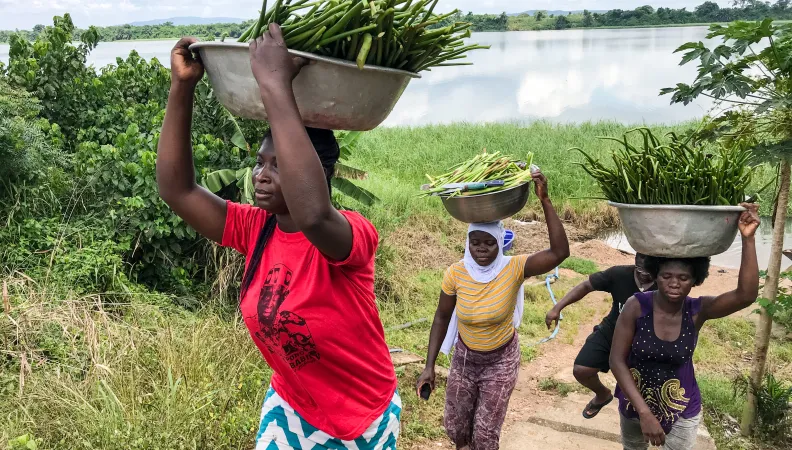
On the occasion of World Food Day, celebrated this year under the theme "Innovate today to feed tomorrow", a review of the innovative solutions supported by the FFEM and its partners around the world to bring about more resilient food systems, more sober and fairer. Forest preservation, reduction of agricultural pollution, sustainable pastoral practices, responsible fishing or water management: from Brazil to Cambodia, passing through Senegal, these initiatives show that the future of food is also at stake in our ability to reconcile food security, health, biodiversity conservation and social justice. So many essential conditions to build, today, new ways of feeding the world tomorrow.
World Food Day reminds us of a major paradox: while the planet produces enough resources to feed its population, millions of people still face food insecurity. At the same time, food systems are placing increasing pressure on ecosystems and natural resources.
While the green revolution increased agricultural yields significantly, it did not solve all food and environmental challenges. Today, the challenge is twofold: to ensure access for all to sufficient, healthy and high-quality food, while preserving the natural resources and biodiversity on which our ability to feed ourselves sustainably depends.
Some key figures*:
- In 2024, international data highlight the scale of these challenges:
- About 673 million people (8.2% of the world’s population) are chronically undernourished.
- About 2.3 billion people (nearly 25% of the world’s population) lack regular access to enough nutritious food.
- More than 2.8 billion people worldwide cannot afford healthy diets.
- Global extraction of natural resources has more than tripled since 1970, from 30 billion tons to 106 billion tons per year according to UN Environment data.
Africa remains the most affected region, with more than 20% of its population undernourished.
Faced with these challenges, the transition to more sustainable food systems is essential. Preserving ecosystems, reducing pollution, better managing water and supporting producers in adopting more resilient practices are all ways to reconcile food security, health and environmental protection.
*Data from UN reports (FAO, UNICEF, WFP)
Comment concilier production agricole, préservation de la biodiversité et revenus des producteurs ?
Some projects explore new production and supply chain models that seek to simultaneously address these issues.
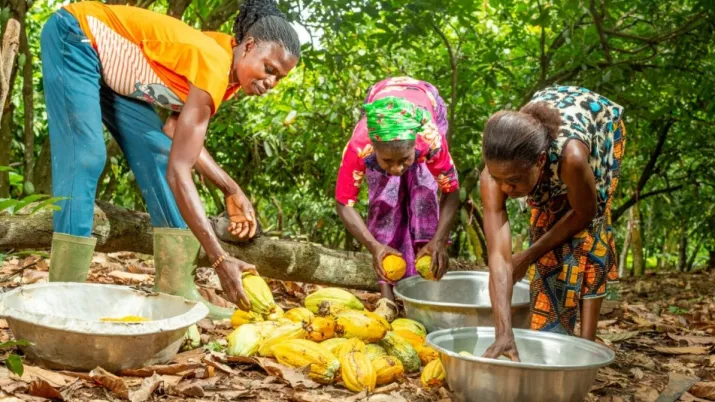
In West Africa, the Equity Cacao project, deployed in Côte d'Ivoire, Ghana, and Togo, is supporting the transition of the cocoa sector towards agroforestry, organic, and zero deforestation models, while helping producers meet the requirements of the European Regulation against imported deforestation (RDUE). It is a continuation of the EQUITY program, supported by the FFEM since 2015, which has notably made it possible to integrate environmental criteria into the specifications of Fair Trade France for products marketed in France and Europe.
In southern Brazil, the natural grasslands of the Pampa are home to exceptional biodiversity, now threatened by land conversion into monocultures. Supported by BRDE (Regional Development Bank of Southern Brazil) and the NGO Save Brasil, the project Alianza Mais promotes sustainable livestock farming practices, develops financing mechanisms adapted to producers and promotes products from production systems that respect biodiversity. It thus helps to reconcile the preservation of ecosystems and the economic viability of farms.
How to produce while protecting human, animal and ecosystem health?
Agricultural practices have consequences that go beyond cultivated plots: The excessive use of pesticides and veterinary products can affect human and animal health, soil and water quality as well as biodiversity. The "One Heath" approach invites us to consider these interdependencies together, recognizing the close links between human, animal and ecosystem health.
In Senegal, the Thiellal 2 project, which benefits from the expertise of Expertise France and AVSF (Agronomes et Vétérinaires Sans Frontières), aims to reduce the misuse of pesticides and veterinary products in the territories of Vélingara and Kédougou. By mobilizing the "One Health" approach, it accompanies local actors towards agricultural practices that are more respectful of health and the environment. The project also focuses on waste management from family farms to limit pollution and promote more sustainable agricultural systems.
How to preserve water resources and aquatic ecosystems while ensuring a sustainable diet?
Marine and freshwater resources are essential for food security, economic activities and territorial resilience. Their preservation requires approaches that link sustainable management of natural resources, adaptation to climate change and the participation of local stakeholders.
Protect seagrass beds and support sustainable fishing
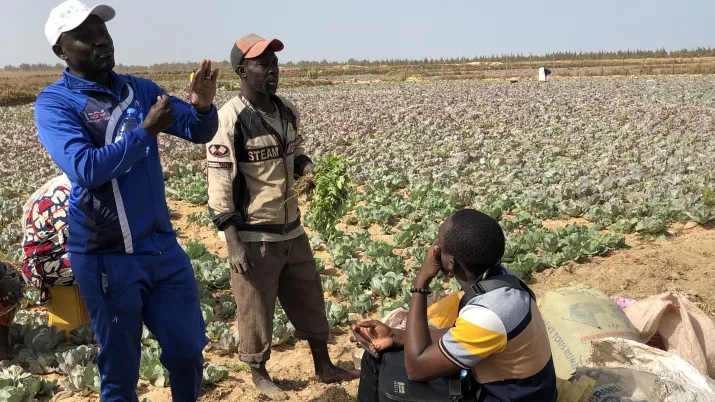
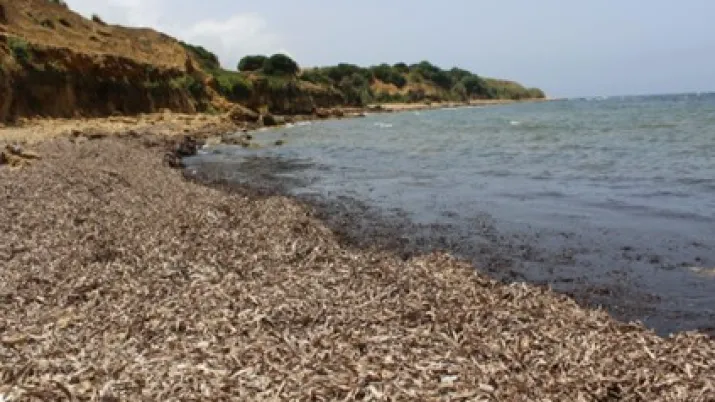
In Tunisia, the PENELOPE project, supported by the French Development Agency (AFD), the Hans Wilsdorf Foundation, WWF France and WWF North Africa, aims to preserve the posidonia seagrass, ecosystems essential for Mediterranean biodiversity, fisheries resources and carbon storage. The initiative combines improvement of scientific knowledge, strengthening of their protection and support for fishermen towards more sustainable practices, in order to reconcile the preservation of ecosystems and local economic activities
Better water management to strengthen agricultural resilience
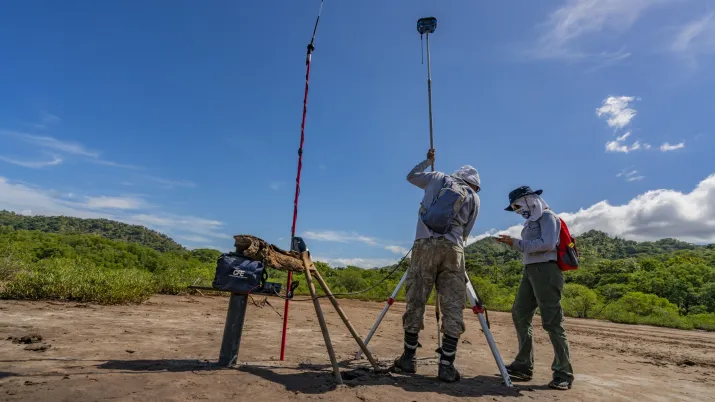
In Cambodia’s Svay Chek watershed, droughts and floods are threatening crops and rural incomes. Developed in collaboration with the French Development Agency (AFD) and the Kingdom of Cambodia, the project focuses on integrated water management and nature-based solutions to strengthen agricultural resilience. The restoration of the river and wetlands, improved access to water for irrigation, and consultation between users should make it possible to secure agricultural production, strengthen food security, while preserving ecosystems.
Feeding tomorrow: a collective ambition
These projects illustrate the diversity of solutions that are emerging around the world to sustainably transform food systems. They show that it is possible to experiment with new agricultural practices, to change supply chains and better manage natural resources, taking into account the realities and needs specific to each territory.
Because sustainable food is not just about producing enough to feed people. It also requires preserving biodiversity, limiting pollution, adapting to climate change, and enabling farmers, breeders, and fishermen to make a decent living from their activities. It also means making healthy, quality food accessible to everyone.
To address these challenges, it is essential to support local initiatives, foster cooperation between stakeholders and disseminate knowledge and proven solutions. Beyond their local impact, these experiences are also sources of inspiration for public policies, particularly in France, by providing useful lessons to change practices and approaches.
This is the challenge of the action of the FFEM and its partners: to support the testing of innovative models, reconciling environmental conservation, food security, and sustainable development, in order to contribute to changing practices and building, starting today, the food systems of tomorrow.
Discover our projects related to food
Promoting blue carbon for sustainable fishing and resilient coastlines in Tunisia (PENELOPE)
In progress
2026 - 2029
Check out our latest news
17 years of partnership with the Conservatoire du littoral: from French expertise to shared solutions
On the occasion of World Maritime Day, to be held in 2026 under the theme ‘From policy to practice: promoting maritime excellence’, the FFEM is highlighting an issue at the heart of its work: translat...
Published on September 25, 2026
Montreal Protocol: the FFEM committed to the ozone layer and sustainable cooling
Published on September 16, 2026
Innovating together: the strength of FFEM’s cooperation, builder of bridges between the South and the North
Published on September 12, 2025