Share the page

Indigenous peoples and jaguars: preserving the forests of the Guiana Shield (JAGUAR GUYANES)
Project

-
Project start date
-
Status
In progress
-
Estimated date of project termination
-
-
Project financing date
-
-
Financing duration
-
4 years
-
Type of program
-
FFEM
-
Global financing amount
-
€ 6 562 000
-
FFEM financing amount
-
€ 2 000 000
-
Project lead member institution(s)
-
French Ministry of the Ecological Transition
-
Country and region
-
Brazil, French Guiana
-
Type of financing
-
Partners
-
Beneficiaries
-
Panthera Corporation
-
Type of beneficiary
-
NGO, Foundation




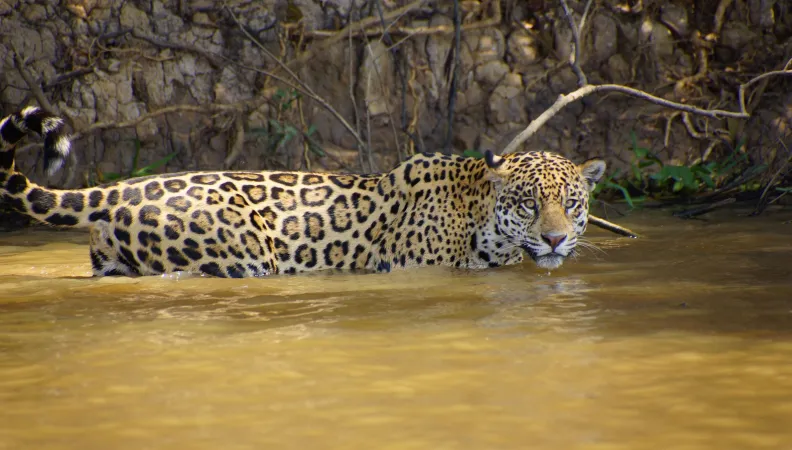
Contribute to the preservation of a global public good - the primary tropical forests of the Guiana Shield - by aiming to conserve the habitat of the jaguar, an umbrella species at the heart of the region's ecological connectivity issues, and by supporting the recognition of the legitimacy of indigenous peoples in the sustainable management of these ecosystems.
Context
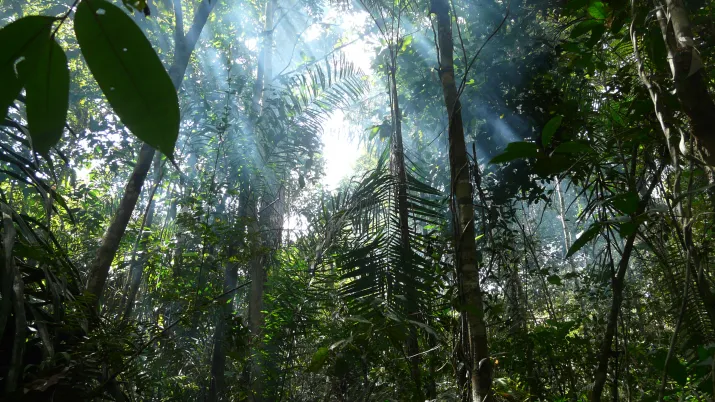
Covering 2.5 million km², the Guiana Shield is one of the last remaining intact primary tropical forest massifs in the world, home to unique biodiversity. Pressures on this ecosystem are increasing, leading to a degradation of its ecological integrity. This degradation is the result of a combination of factors, including unsustainable mining and logging activities, the construction of linear infrastructure that fragments natural habitats, inadequate legal protection frameworks, lack of coordination between states, and limited recognition of the rights and knowledge of indigenous peoples. These pressures threaten the region's biodiversity, particularly species of high ecological value such as the jaguar, as well as the cultural and economic sustainability of local and indigenous communities.
Description
Implemented by Panthera in collaboration with its partners ACT Guianas, IEPE, and OFB, the project is structured around four specific objectives:
- Strengthen and harmonize the collection and management of data on jaguars, their prey, and their habitats across four countries and territories (Brazil, Guyana, French Guiana, and Suriname).
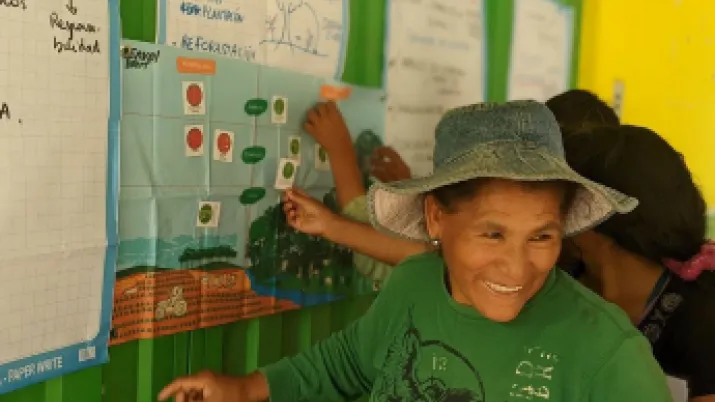
- Implement collaborative conservation actions with local communities and indigenous peoples (CLPA) and support government recognition of this role and these actions, particularly under AMCEZ (“Other Effective Area-based Conservation Measures” promoted by the United Nations Convention on Biological Diversity).
- Develop sustainable income-generating activities based on ecotourism and the strengthening of value chains for agricultural and biodiversity-based products through “Jaguar Friendly” certifications.
- Strengthen regional cooperation on the protection of ecological connectivity corridors, jaguar monitoring, and the mobilization of funding from Conservation Trust Funds active in the region.
Results and expected outcomes
- Consolidate databases and strengthen national capacities for monitoring and protecting biodiversity in the Guiana Shield.
- Identify and protect new conservation areas in a collaborative manner, focusing on ecological connectivity issues.
- Develop sustainable local economic activities that contribute to the protection of the jaguar and improve the living conditions of CLPAs.
- Structure cross-border cooperation and secure long-term funding.
Innovative and exemplary features
FFEM support will enable experimentation with integrated governance and monitoring models to preserve ecological connectivity between protected areas. In this context, the project promotes innovative tools, such as the creation of a regional jaguar database, support for official recognition of conservation actions carried out by indigenous peoples under AMCEZ (essential for achieving the 30x30 target), and sustainable financing mechanisms aimed at mobilizing the region's three national conservation trust funds.
The project will also contribute to the operational implementation of France's commitments under several international conventions (CBD, CITES, CMS) and regional cooperation agreements in which it participates, primarily the Jaguar Roadmap 2030. By supporting the operationalization of the Jaguar 2030 Roadmap, the project constitutes a regional pilot project, on a coherent ecological scale, demonstrating how to link the conservation of a migratory species with ecological planning and inter-state cooperation.
Sustainable Development Goals
ODD8 Decent work and economic growth
ODD13 Climate action
ODD15 Life on land
ODD16 Peace, justice and strong institutions
ODD17 Partnerships for the goals
Learn more about our projects
TerrIndigena, for the rights of indigenous communities and their environment
In progress
2021 - 2026

Protecting the Amazon forests and strengthening communities in Colombia and Peru
In progress
2025 - 2028